
AUGUST 2026-08 Volume 1, Number 8
Words and photos by Mike Evans
CalNativeHort: Connecting people to people and places through our shared connection to native plants.
Connect: Fostering a genuine bond or bridge, uniting separate entities into a single, shared journey.
Horticulture: The art, science, and craft where people put their hands, hearts, and heads together into the world of plants.
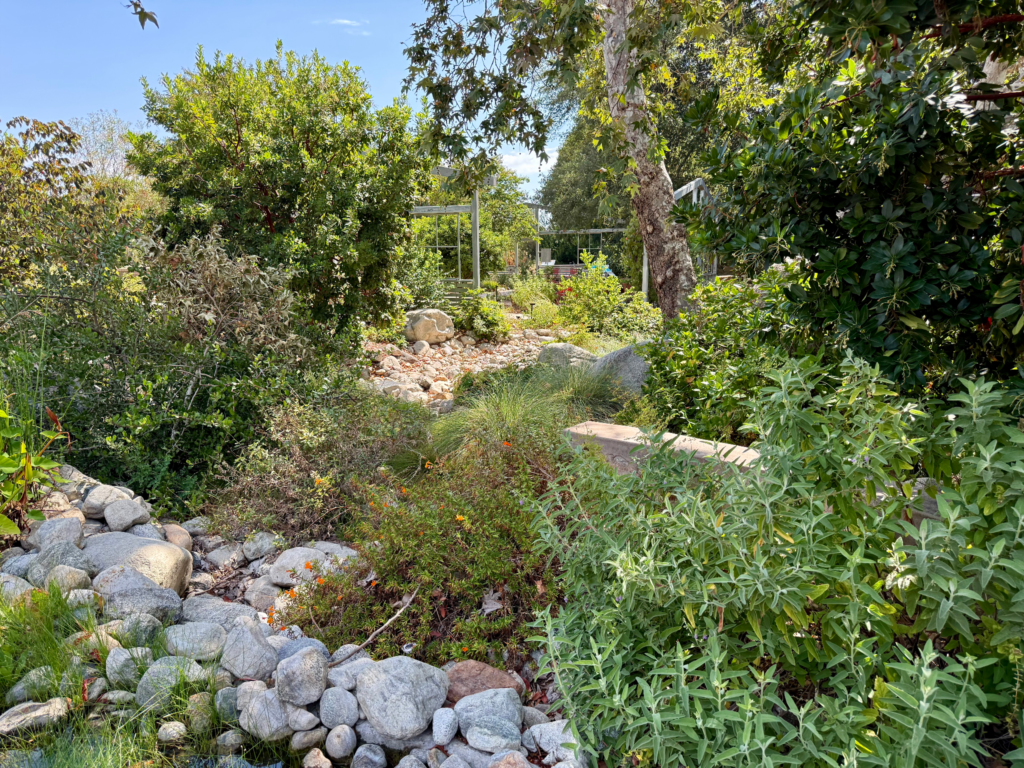
We are happy you are here to discuss and celebrate the traditional connection to native plants through practiced acts of nurture and care.
The good news is that horticulture is alive and well, a multigenerational “joy of gardening…’
…but we’re sorry to say that it is being overshadowed in most of California by a “force” that simply reduces the thoughtful and intentional stewardship of plants to a common malpractice involving motorized tools performing thoughtless tasks, hurried through an outdoor space to its ultimate demise. The “green industry” would define this aberration as “landscape maintenance.”
Unfortunately, in many cities and suburbs, basic plant care is presented to public view as follows: a crew of seemingly nameless guys in bright safety clothing, (at times replete with hardhats and goggles as if it were hazmat), each holding something involving an internal combustion engine, spewing noise and toxic smoke to perform a job we used to call “gardening.” To me it looks like they have declared war on new growth. Shrubs are mercilessly hacked into every conceivable shape.
Over the past 50 years (we had severe drought in 1976), native plants and other so-called “California Friendly” plants have been promoted for their ability to “save water” and the resultant “drought tolerant” landscapes were also labeled “low maintenance.” What happened?!?! Why is there more noise and more activity than ever in commercially maintained landscape space (I am hesitant to call these places “gardens”), and why are these “low maintenance” common areas being continually over-maintained to their detriment?
I’ll leave the answers to each reader, so we can get our minds off the negative and focus on the positive.
We, you and I dear reader, are part of a quiet revolution set to reclaim an important ethic – that gardens are healing spaces where we connect with nature, each other, and perhaps an interior spiritual self – and we do this as in no other place. While our preserved natural areas offer unique opportunities for connection, and equally edifying are activities like reading good literature, music, art, meditation, and anything to slow the pace, and calm the soul, the fact remains that gardens are the most effective because inside them we practice a specialized art utilizing our heads, hearts, and hands to manipulate nature. It starts with an attitude, an ethic. In natural gardening we at least approach the topic with respect, even reverence, and then we set out to do our best, learning from our mistakes and growing alongside each other and our plants.
Current events, history, review, and notes
Summer heat has arrived and is here to stay for a few more weeks. If you are applying water, please be judicious and careful, as many native species can succumb to root rot fungal disease if the soil is both saturated and warm. Read on. The goal: Deep roots in cool moist soil where oxygen is also present in the pore spaces. Dry soil, or sopping wet soil lacking oxygen will not do.
In the News
California Native Horticultural Foundation (CNHF or CalNativeHort) officially launched in 2025 after a couple years in initial preparation. As a brand new nonprofit we are following a path already traveled by Tree of Life Nursery and many others. We bring old legacy and experience into a new expectant place where ideas and youthful energy are both anticipated, present, and welcomed. Needed.
On a personal note, after 45 years, last month I said goodbye to the Tree of Life 40-acre leasehold on Rancho Mission Viejo. Timing is everything. This month I am happy to report that CalNativeHort has a new home.
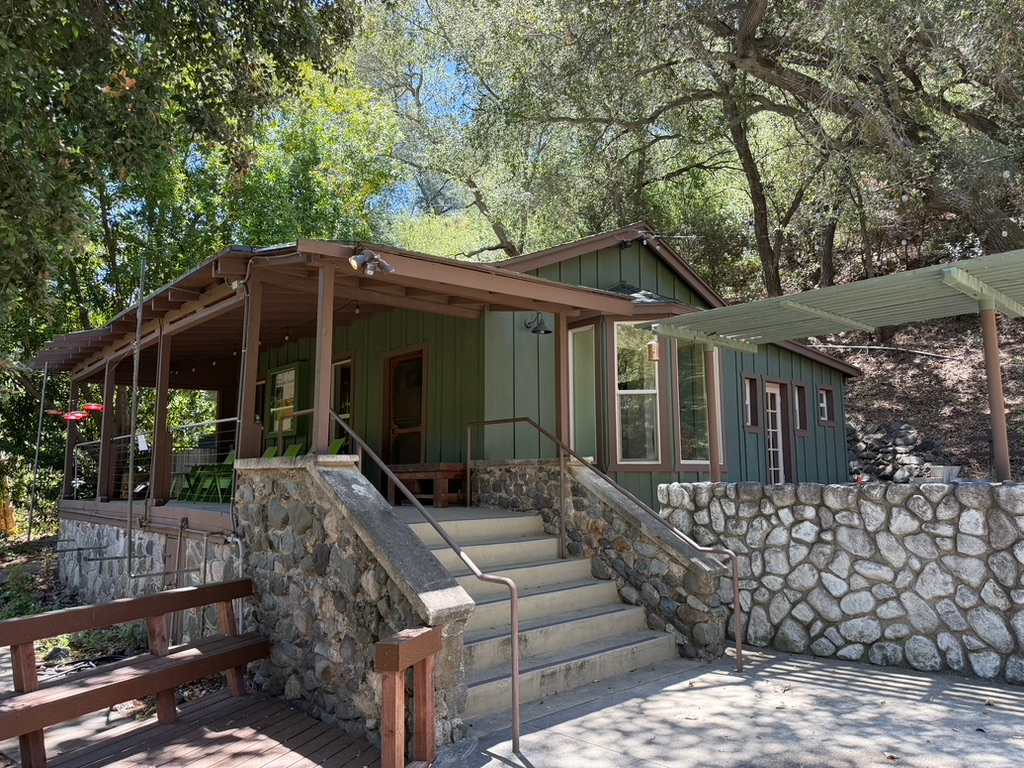
We wish to thank the Environmental Nature Center, their board and entire team, particularly President and Vice President Bo Glover and Lori Whalen for inviting CalNativeHort to partner with ENC promoting connection to nature for everyone. We have an office headquarters and a nursery site at ENC Tucker Wildlife Sanctuary.
In the Words of Michelle Matthews
I’m thrilled to share some big news for our members: Cal Native Hort now has a home! We have officially established an office at ENC Tucker Wildlife Sanctuary in Modjeska Canyon, through a new partnership with the Environmental Nature Center of Newport Beach.
This is our inaugural location and it’s hard to overstate what that means for us. Tucker is a 12-acre preserve with a rich riparian habitat and a long history of environmental education in Orange County. We’ll be occupying dedicated office and nursery space there, giving us room to grow our propagation work, our educational programs, and our community events in a setting that reflects exactly what we’re about.
There’s also a piece of history here that feels especially precious. The land that makes up Tucker Wildlife Sanctuary was once part of Helena Modjeska’s estate, where a young gardener named Theodore Payne worked in the 1890s. That experience shaped Payne’s lifelong dedication to native plants and helped launch what eventually became a major branch of the native plant movement in California. More than a century later, we’re bringing native plant propagation and education back to the same canyon that helped start it all.
You can read all about it here
Thank you, as always, for being part of this community. Milestones like this one happen because of your support.
With gratitude,
Michelle Matthews, Executive Director, CalNativeHort
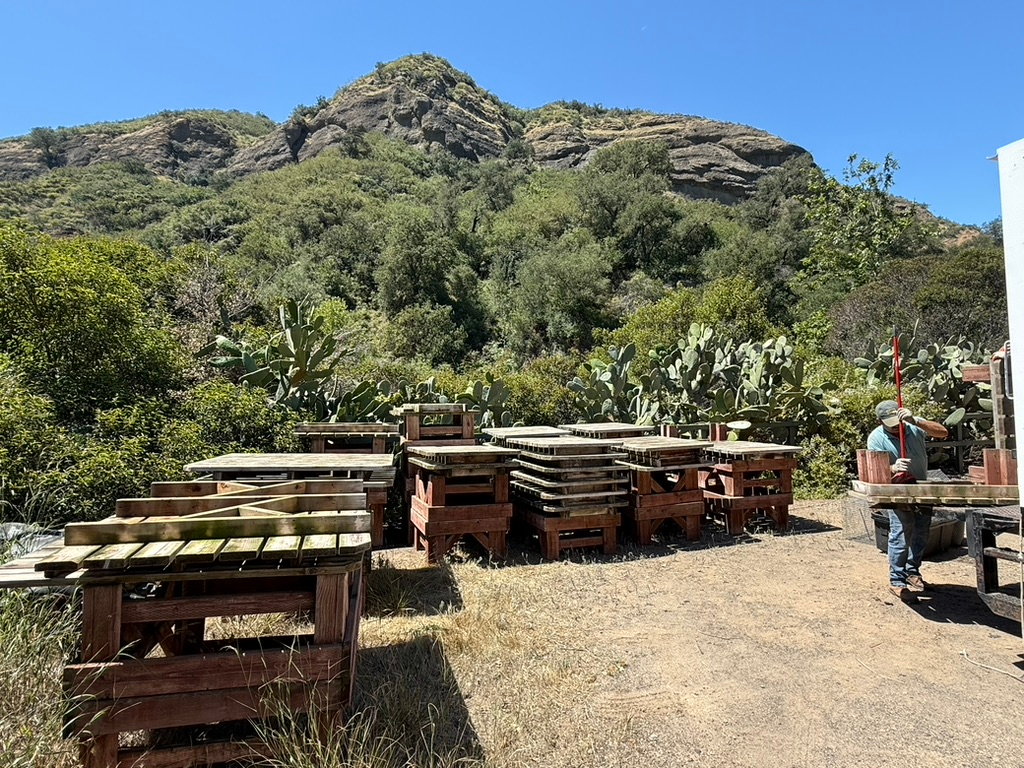
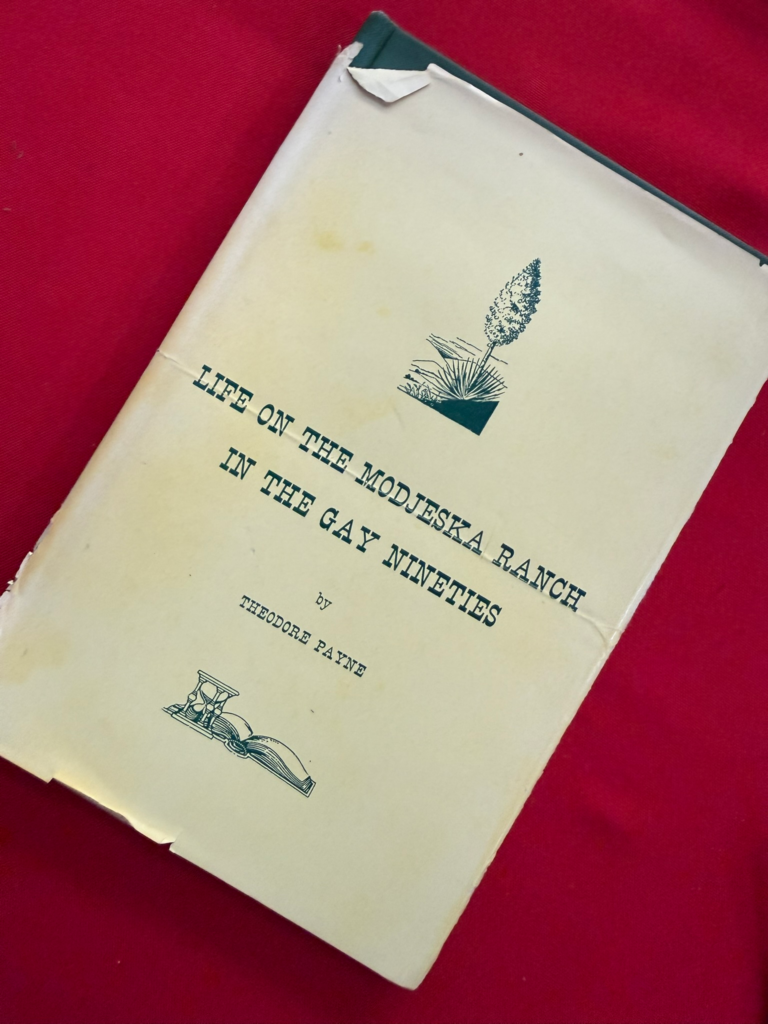

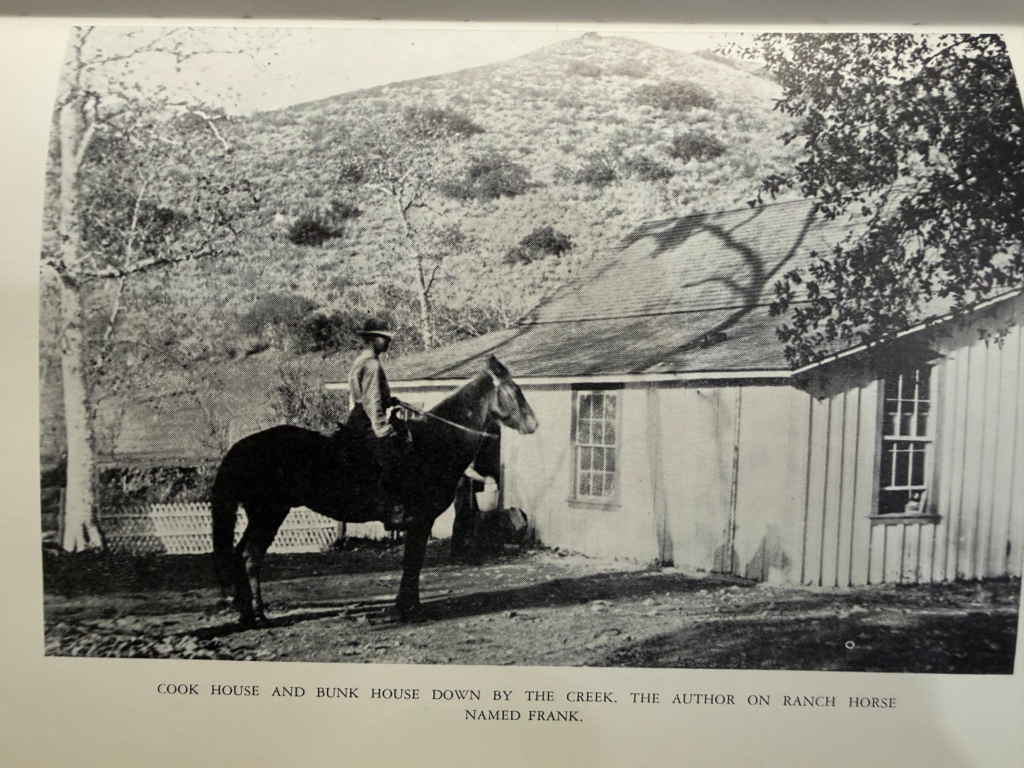
Theodore Payne, gardener for Madame Modjeska, fell in love with California’s native plants 130 years ago in the very spot where CalNativeHort will operate a small teaching nursery today. The story comes full circle in Modjeska Canyon.
Native horticulture this month
Practice good hygiene in all your garden tasks, to minimize the potential spread of disease. If you see twig die-back on manzanita, it may be a fungus called Botryosphaeria. Regardless the causal organism’s name, the best remedy is to break the twigs off with your fingers, rather than cutting them with shears. Discard the diseased branch tips in the trash and clean up under the plant. Wear gloves, as manzanita twigs can break off sharp.
Sanitize all pruning tools with an 8-second dip in a 10% solution of bleach to water (10/90), or rubbing alcohol, or use Lysol spray. This is especially important if you are pruning into dead or dying wood.
If you remove a plant that died because of fungal root rot, leave the hole open for several days so the sun can heat the soil and kill much of the exposed pathogen.
Regarding weed seed, if you intend to remove grasses or other weeds that have set seed, try to carefully first cut the seeds off and place them in the trash before attempting to pull or cut the weeds. Try to reduce the amount of seed that might stay behind after the weeds are gone.
Watering
This tried and true watering method was first created and described in the Tree of Life Nursery newsletters several years ago, and its definition has been repeated in various installments over the years.
Deep Soak (DS) and Refreshing Sprinkles (RS) equals Success
DS + RS = Success
See Vol. 1 Number 5, May 2026 CONNECT in this Newsletter series for a complete description. After a long history of Tree of Life newsletters and seminars, an explanation was published for the first time by CalNativeHort in May 2026 CONNECT, under the heading Watering.
Pruning, Weeding, Feeding, Mulching / Top Dress
Pruning – corrective, remove diseased or dead, some shaping, wait until it is cooler for major pruning. If you have fallen behind on thinning and pruning, start now with a goal to complete the job in October. You can prune approx one-third now and the rest after the weather cools.
Weeding – always and whenever
Feeding – no plant food needed in summer except on container plants as necessary
Mulching/Top Dress – not necessary to bring any foreign top dress material into the garden during the warm season
Troubleshooting – Varmints, Pests and Diseases
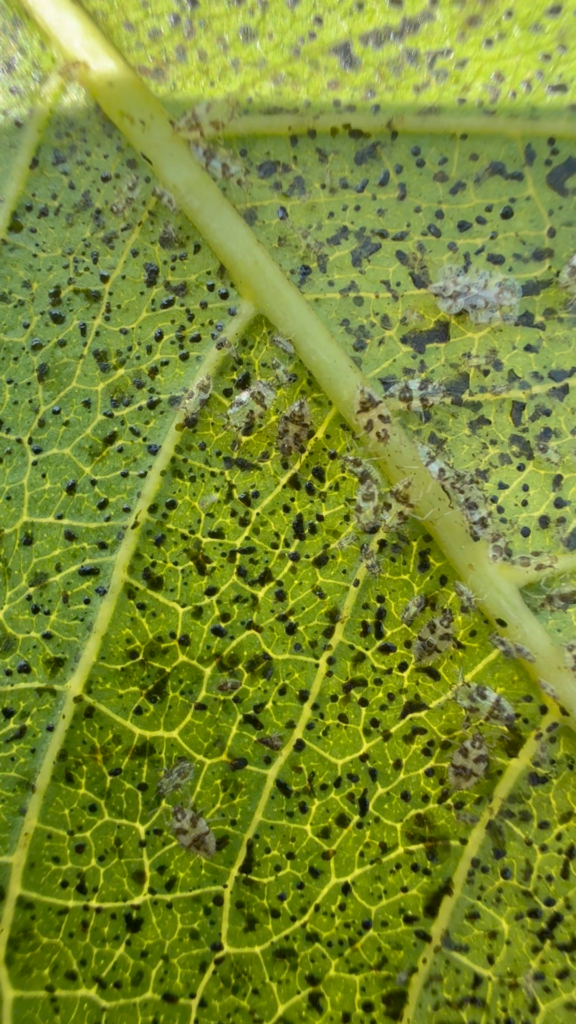
Lace Bugs. True bugs Order, Heteroptera Family, Tigidae (Thanks Bob Allen for sorting this for me), on subtropical fruit Casimiroa edulis, matasano or sapote. See Vol. 1 Number 6, June 2026 CONNECT in this Newsletter series for a complete description and recommendation for treatment for insects with sucking mouthparts, classified in the related Order Hemiptera including aphids, scale, mealybug, thrips, leafhopper. Note: to treat this infestation, I pruned and discarded the most affected leaves, blasted the plant with water, and remained vigilant for the next generation. UC IPM Lace Bugs
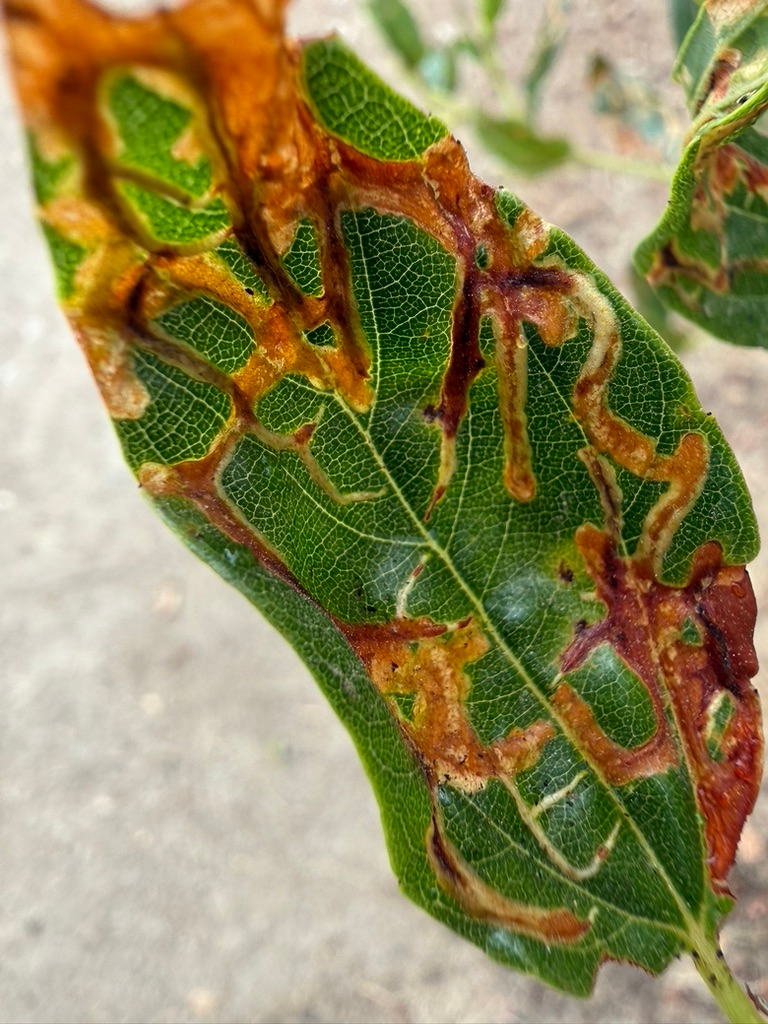
Leafminers on Ceanothus spinosus. At this point the damage is done, the only effective “treatment” would be pruning for purely aesthetic reasons. The damage is inflicted by the larvae of flying insects like flies, moths, and sawflies. You can see where the egg was first laid at the narrowest point in the leafminers “mineshaft.” As the insect feeds, travels, and grows, the tunnels grow wider until at last the larva drops to the soil to pupate and emerge as a flying adult. More detail UC IPM Leafminers Treatment: since the life cycle is very short during the warm season only, it’s probably best to simply let your plants tough it out. If very small plants are involved, cut the leaves off and discard them to prevent subsequent generations on the same plant.
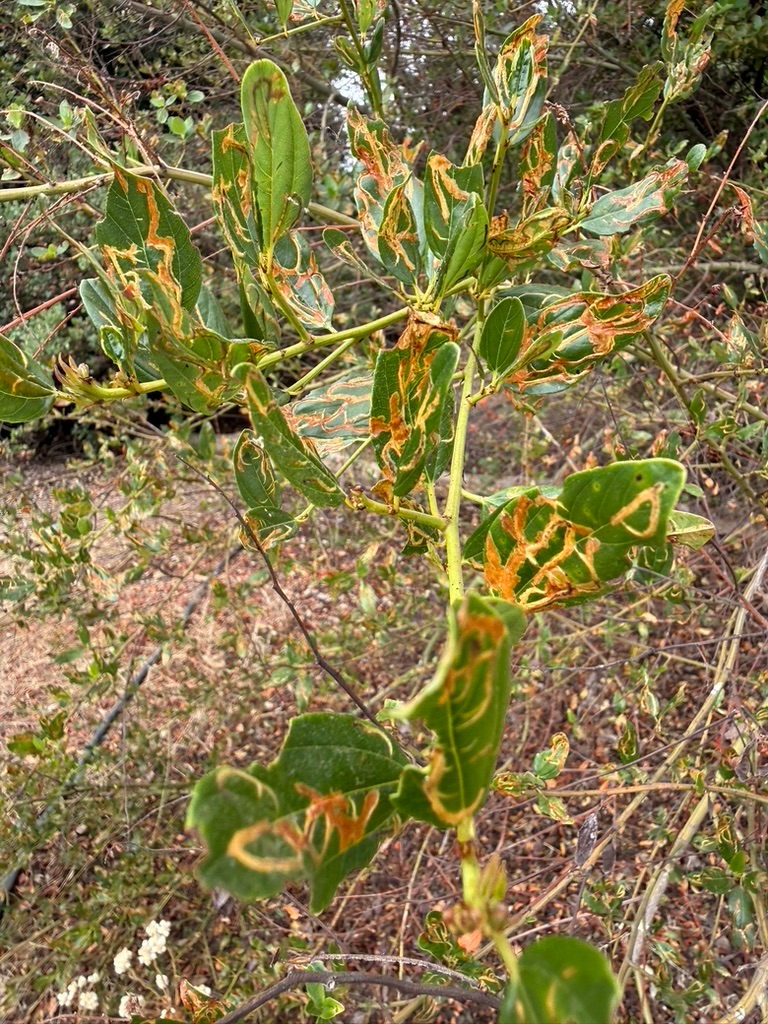
One can only imagine that in the big picture, these little rascal leaf miners are beneficial to some other organism. Something must feed on the flying adults. In this case, the ceanothus is a host, and if you follow this insect, this plant, and the details of the food web, you will find you are witnessing a link in a long chain of creatures.
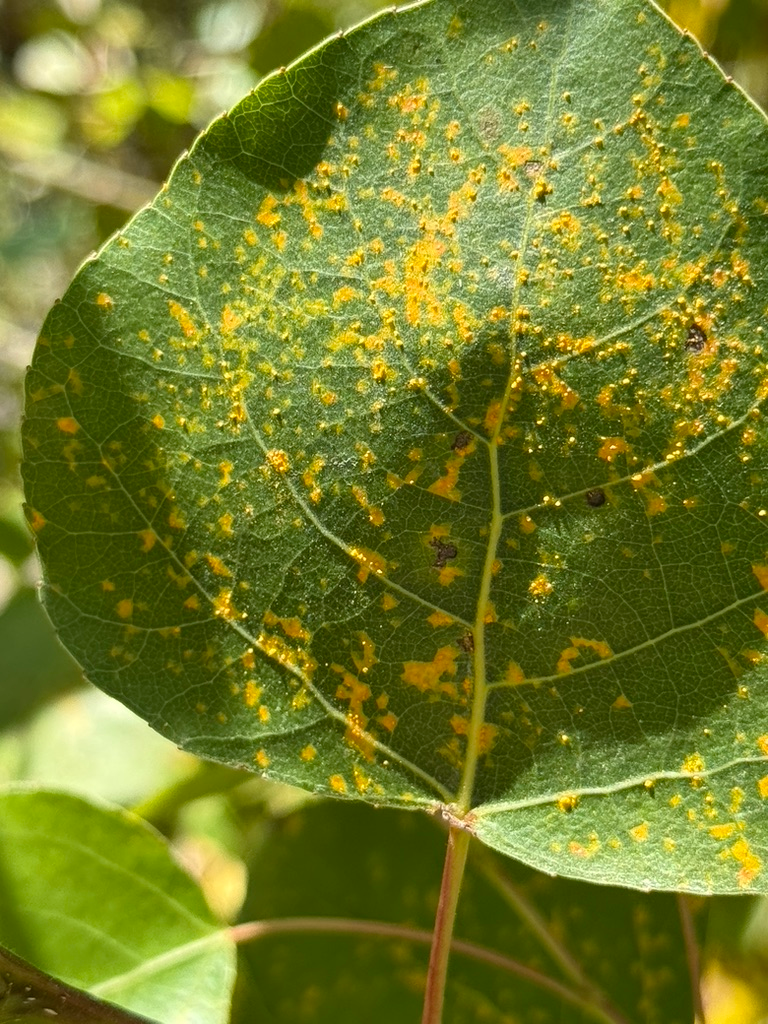
Rust on Populus fremontii, cottonwood. This fungal disease is commonly found on riparian species like cottonwood and willow. Rust is typically treated and not simply tolerated in ornamental gardens. For instance, rosarians vigorously spray to prevent and eliminate this fungal leaf disease on their roses. Meanwhile, natural gardeners can simply wait for these native trees to lose their leaves in winter. If you want to lessen the potential for severe infestation next near, clean up under affected trees and discard the old leaves, as the disease can overwinter in the leaf litter.
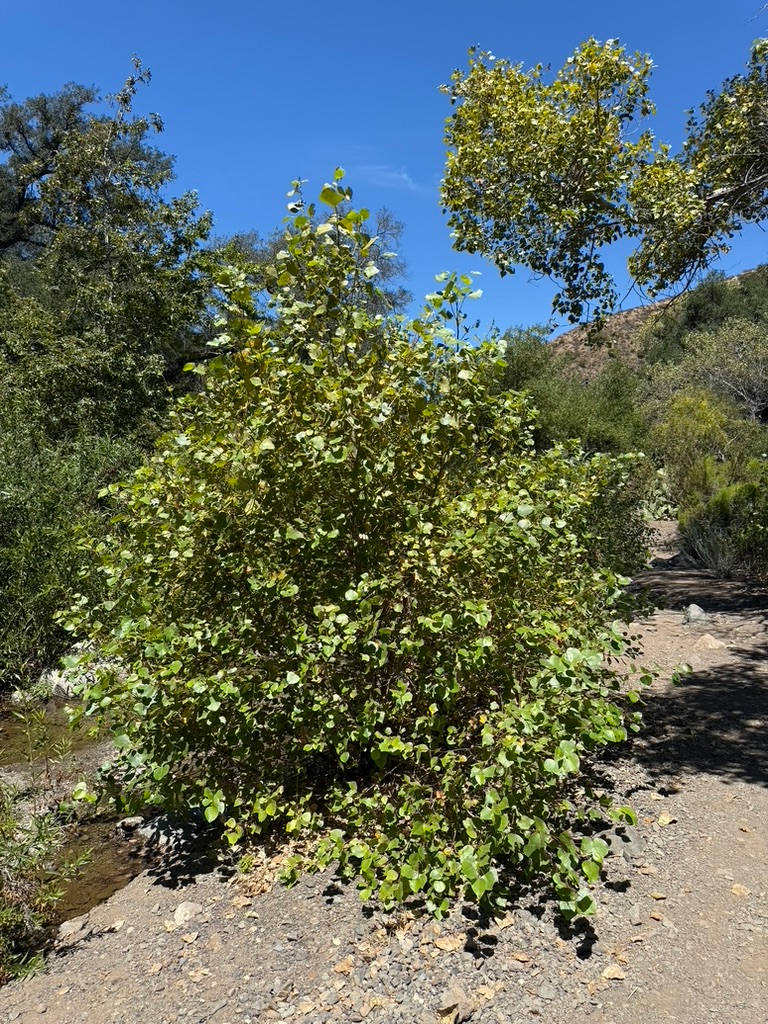
This native cottonwood, infected with rust on its leaves, could practically care less.
Summary: Our goal regarding injurious plant pests and disease is to create a thriving ecosystem in our gardens, where overall plant health, a balance between good guys and bad guys, and seasonal/environmental implications will favor minimal or no intervention from us to take “control”. That said, when a plant needs our help against an injurious agent, we have a responsibility to do what we can in a timely fashion. This is horticulture.
Adding plants and seed
Counting the days. October is best. If the season seems amiable, we have been known to push the safe date for planting forward to September 15. But definitely not August. This month you can place rocks, amend soil, build mounds and swales, patios and structures, and start identifying your sources for plants. But postpone planting for a few more weeks, ideally time it to be close to the rainy season.
It’s a great time to collect seeds, clean them and store them for sowing this fall/winter.
My Patio Re-wild (small space)
We love potted plants, raised planters and patios. If yours have all found that your summer rhythms are amenable to their health, you can transplant, repot, add plants, prune, fertilize, and re-organize soon enough. Fall is coming. If you feel you must do something this month, consider adding a perfectly tuned windchime. P.S. Desert plants can be handled safely in summer.
Phytophilia
Our love for plants and their reciprocal response. The conversation.
This month the dialog revolves around “sunlight.”
There’s lots of it in August. And it’s what plants need to miraculously turn a few elemental chemicals, water, and carbon dioxide into living (I believe, sentient) beings that produce our oxygen, thank you very much. It’s only life as we know it… oxygen, that’s all.
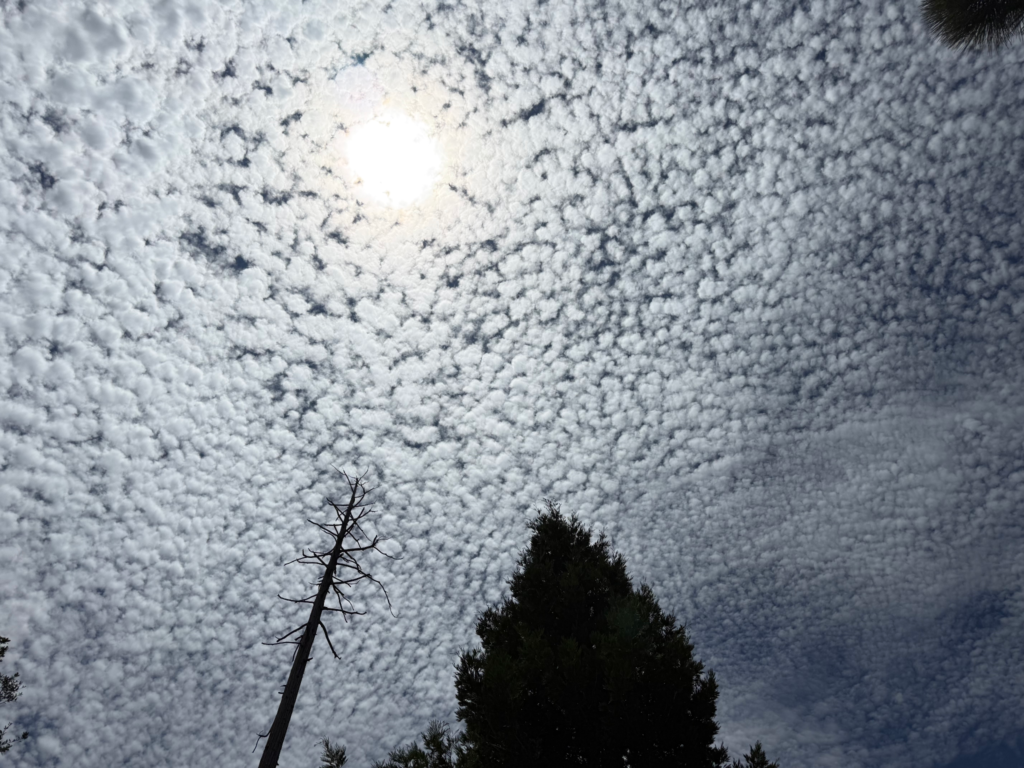
So if you see a garden plant wilting during a few hours of direct sun, and you are sure the soil is sufficiently moist, the thing you are seen is called “midday depression,” an agricultural, (not psychological, though I feel it sometimes as well) term, defining the phenomena when a plant simply cannot get water to it leaves as fast as it is transpiring, cooling itself in the process called photosynthesis, temporarily wilting. Wait until evening. Your plant will be revived.
But if you see a garden plant wilting in soil you discover to be dry, the thing you are seeing is called the “wilting point,” also an agricultural term essentially meaning “It’s time to water amigo.” Basically the chemical, ionic, and physical attraction bonding water to each soil particle is stronger in binding that moisture to its surface than the plant root’s ability to pull that water into the plant. Each plant is different. Obviously hibiscus, a tropical plant will wilt and even die long before a toyon may feel thirsty. Toyon root hairs are stronger than hibiscus at pulling water out of the soil. They need to be. So don’t water your toyon if you see an adjacent hibiscus wilting. And don’t let your soil go beyond the wilting point for whatever crops you are growing.
Also be sure to thank sunlight for that big breath of oxygen you just enjoyed.
Re-wild Principles
You may have heard it said, “Imitation is the sincerest form of flattery.” Some may take exception or even offence, insisting that one’s work need be original to bear value. So you may also remember a corresponding ancient proverb: “There is nothing new under the sun.”
I believe we can create original works of beauty in the garden by carefully imitating nature, thereby honoring and in a way flattering her. But to do so, we have to observe, record, study, appreciate, even revere the qualities of nature that are imitatable by such simple (I’m sure sentient) beings as us.
So in order to practice Re-wild, it helps to know something about Wild. Since garden activity is minimal this month, maybe some additional quiet study time is in order.
Important Review
Go find a rake not a blower
Deep roots in cool soil
CalNativeHort thanks ENC for our new home at Tucker Wildlife Sanctuary, T. Payne’s old home
Sanitation, hygiene and garden health
Good guys desirable, bad guys undesireable, big picture, long chain connects us all
Be patient. Fall planting is best.
There’s always room for musical wind
Sunlight aplenty
Study Wild
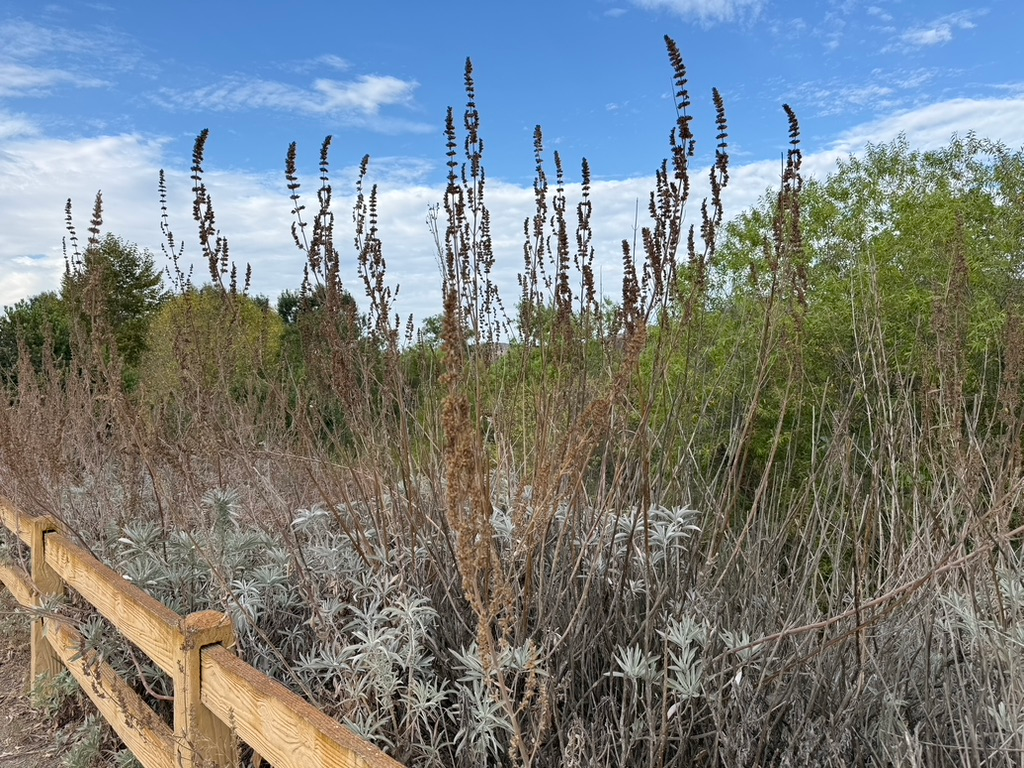 Cultivated Salvia apiana, white sage, a good source for material and seeds.
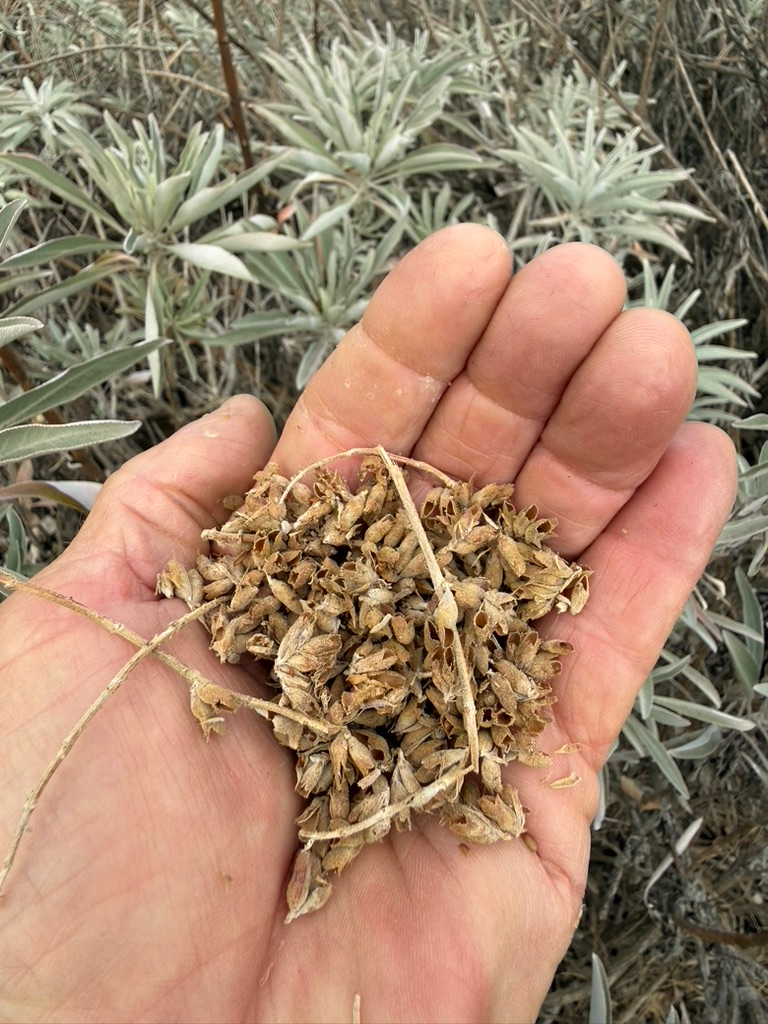
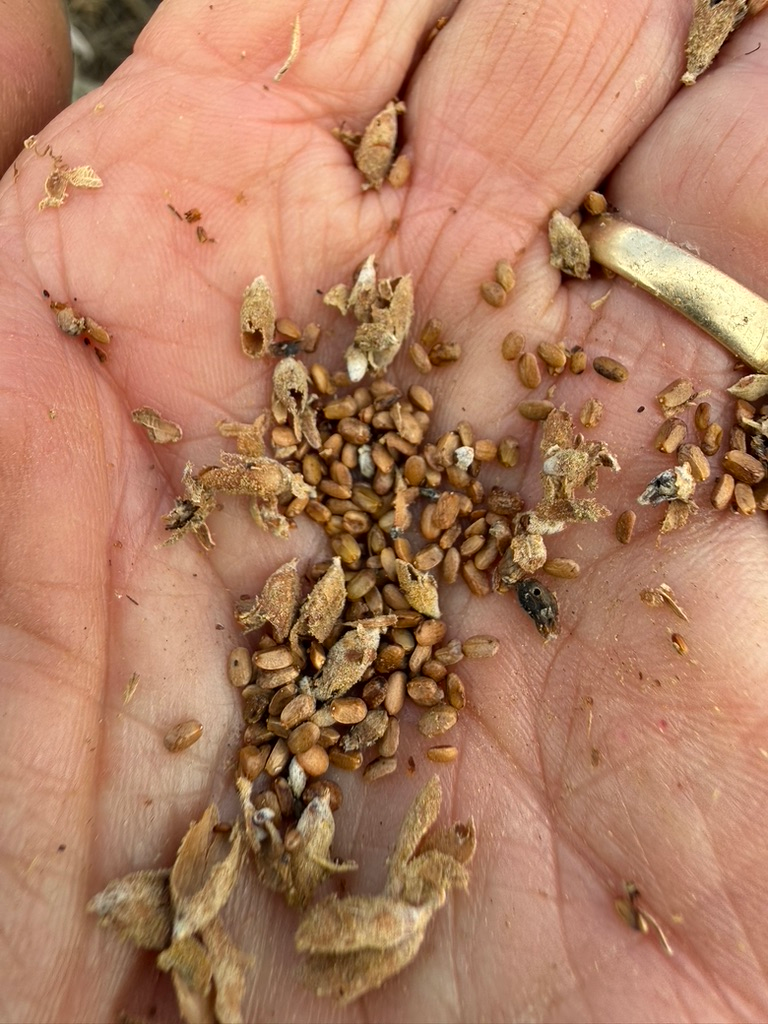 Seeds. Salvia apiana, white sage.
Engage
If you have read this far in the August 2026 newsletter, you are probably one who agrees that simple acts such as setting a sprinkler, opening and closing a valve, hand watering, Deep Soaks, and summer evening Refreshing Sprinkles are occupations we consider Time Well Spent.
The craze that sent us into the era of “low maintenance landscapes,” went too far. When the perfect storm included drought, a burgeoning population, and water scarcity exactly 50 years ago, “turf” became a bad word and lawnmowers were shunned, (except in places like San Marino where perfect lawns are still practically a religion). Shrubs and ground covers were offered as viable substitutes for useless turf, and breeders set out to introduce new turf varieties that required less water for sports fields, playgrounds, golf courses, etc. The “drought tolerant,” “low maintenance” landscape era was born. “Xeriscape” was one label that never really stuck, but the basic point was to replace turf with appropriate plants that would thrive on much less water. It was a good idea with a timely start.
How we got to the hyper-automated, over-pruned, every-weed-sprayed, ever-leaf-blown-to smithereens, HOA-property-manager, commercial-industrial sterile-outdoor space we call landscape is a long story, that includes factors like big-box-hardware, cheap-powertools, abundant-labor-force, and a subtle-but-constant brain-washing that has convinced the general masses that time spent in the garden is not Time Well Spent. And as long as “landscape maintenance” is defined by bright vests, hard hats, toxic chemicals, carbon monoxide, plastic pipe, noise and more noise, I guess I would have to agree. These things would send any sane person running the other direction as fast as they could.
So how can we get folks to maybe tiptoe back into a Real Garden? By making beautiful natural gardens and taking care of them with pride. Native plants, hand tools, sustainable organic methods and items as basic as a garden hose. We can do this. It will be Time Well Spent.
I think we’re gonna be alright.
From August CalNativeHort CONNECT,
Mike Evans
Questions? Help is just one call or one email away. connect@calnativehort.org