
JULY 2026-07 Volume 1, Number 7
Words and photos by Mike Evans
Summer, Middle of, Year of Our Lord Two Thousand Twenty Six, and All’s Well.
On a strictly personal note from the author, I apologize for missing the sending of the 2026 Summer Solstice poem. Hand written in my journal you would find the following on the June 22 page (in case you were looking)
First day of summer
Solstice poem is overdue
I’m not in the mood.
I warned you it would be personal. I’ve been posting a poem at each celestial Quarter Day, for many years.
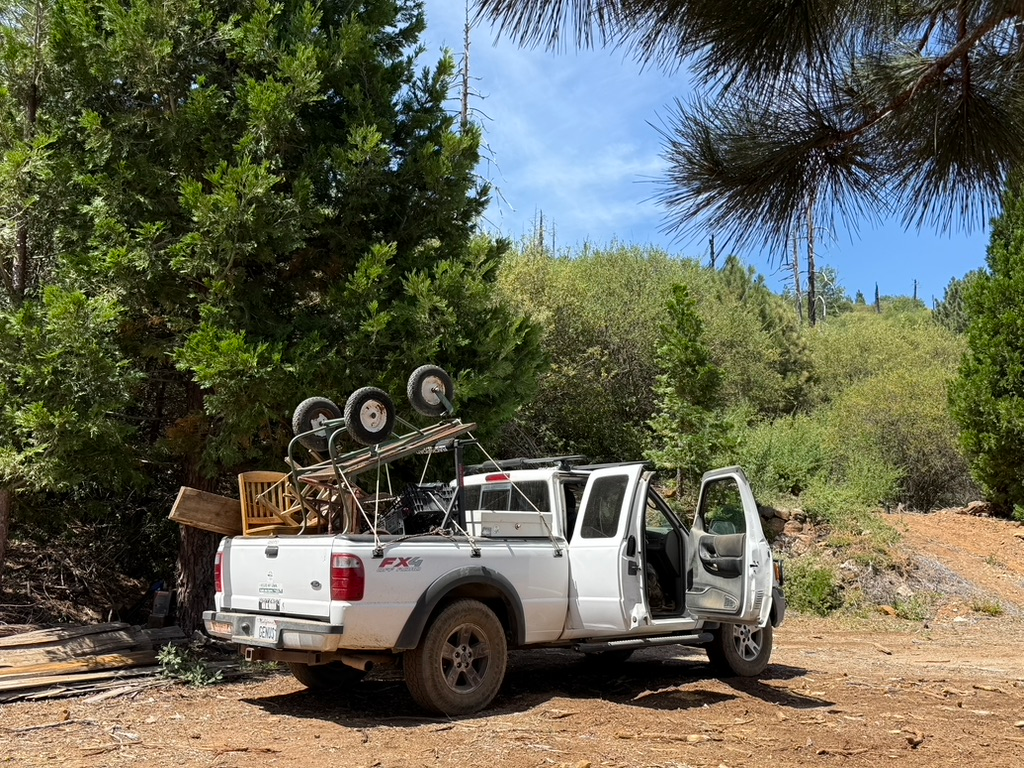
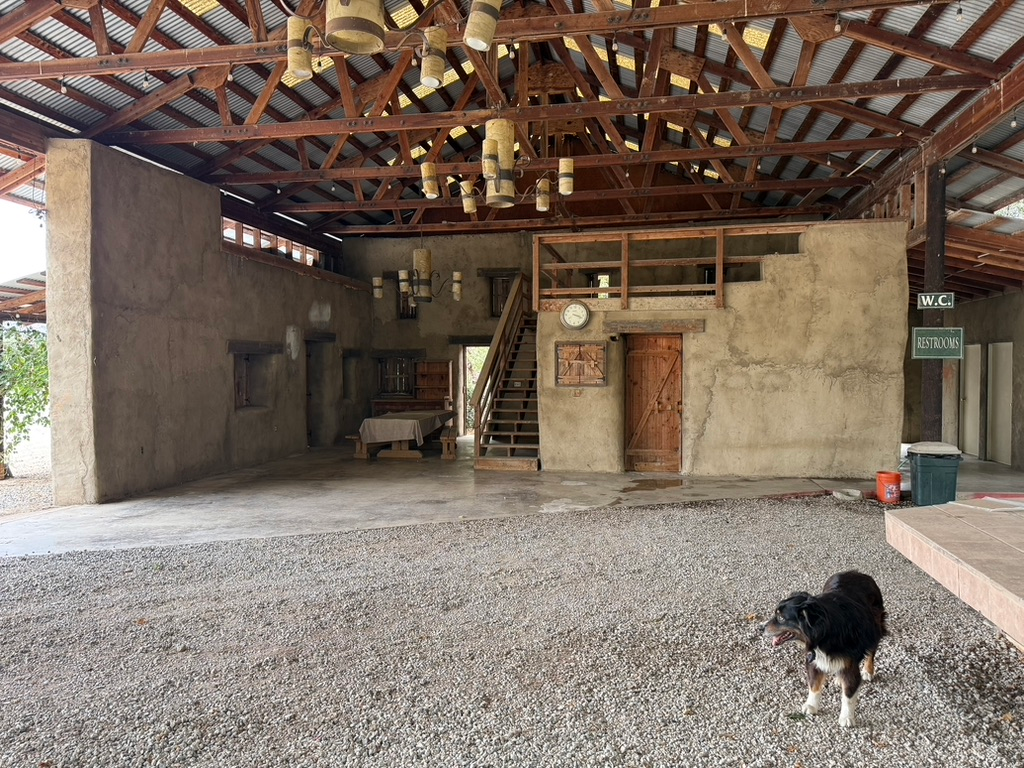
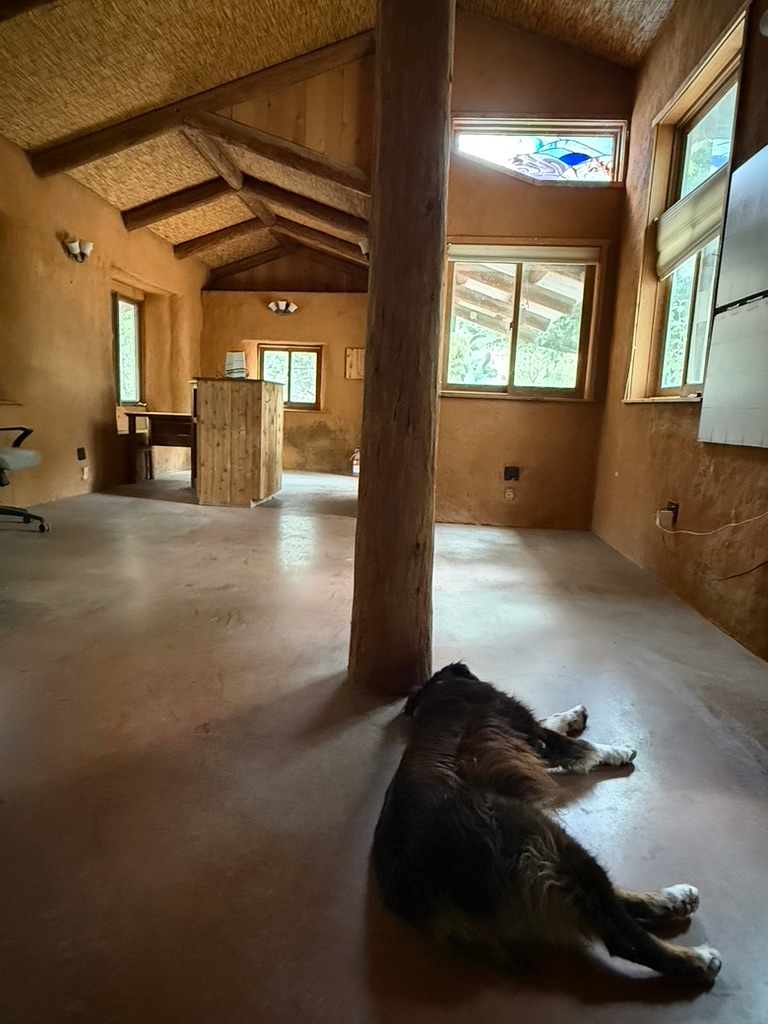
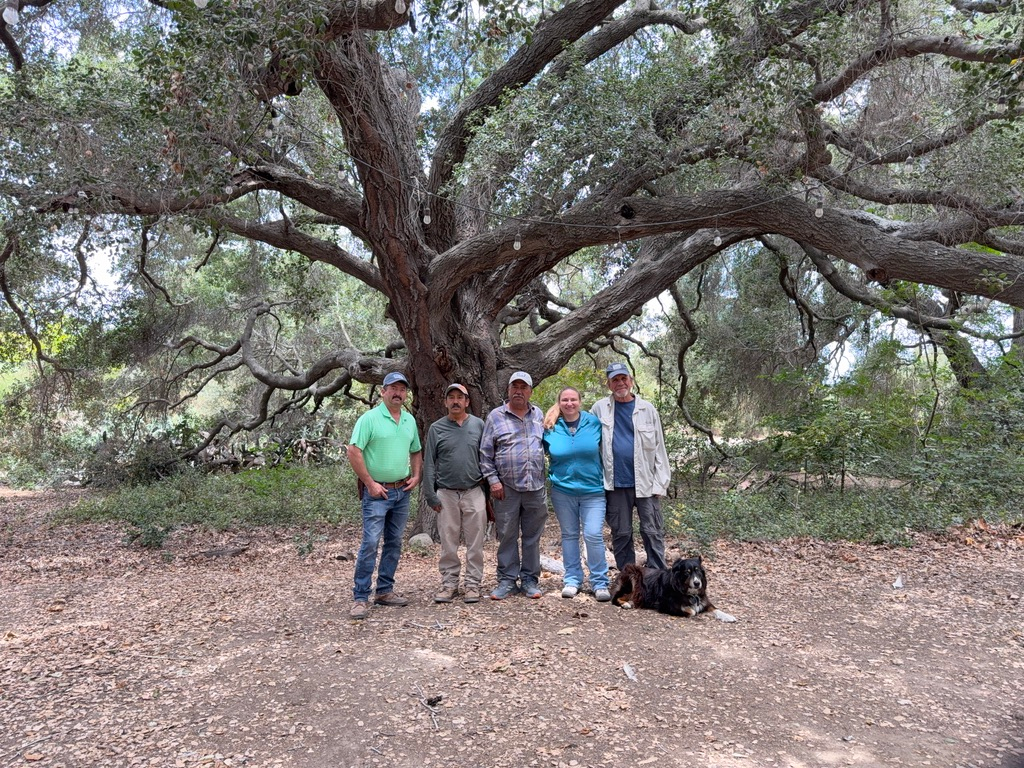
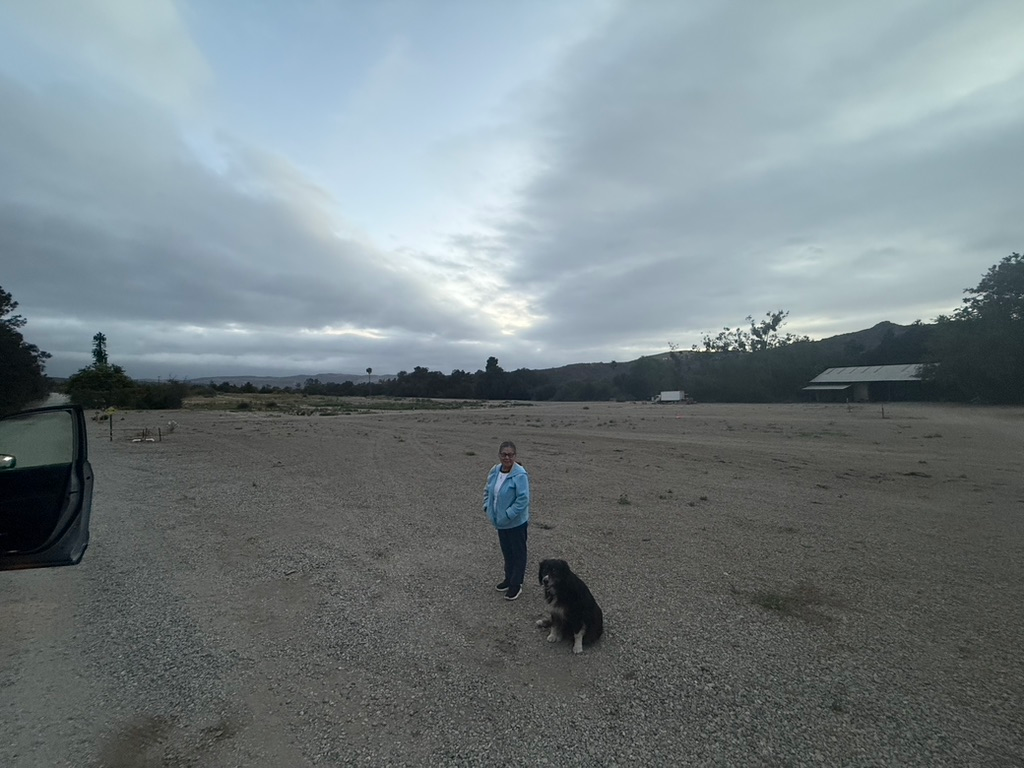
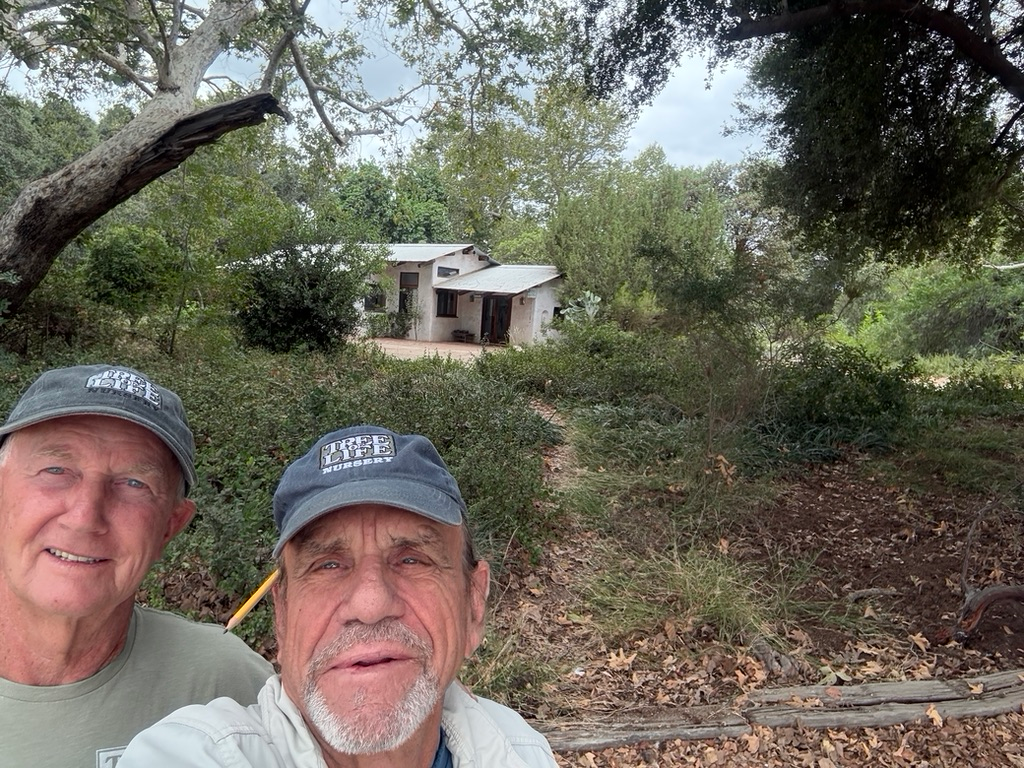
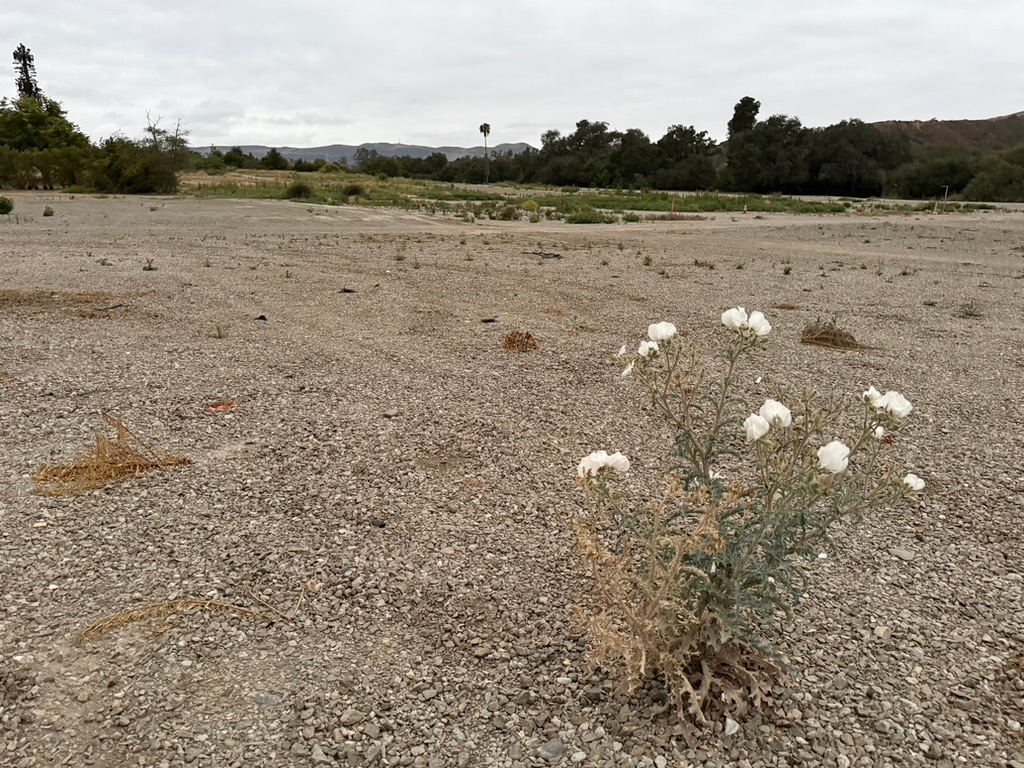
The good news is that after 48 years in operation, the 2 year take-down of Tree of Life Nursery is complete. We made our deadline of June 30, 2026, with the very last few scraps headed to a camp I am building on the land I kept, after the cabin I built was lost in the 2003 Cedar Fire.

Current events, history, review, and notes
The preceding was somewhat personal, but since many CNHF members and followers were faithful Tree-of-Lifers, I thought you would be interested in this report of our last day. Keep an eye on treeoflifenursery.com for more stories and details about the final few weeks at the nursery. The upshot of all this is that I’m looking forward to focusing more attention on the California Native Horticultural Foundation.
In the News
Pending: Important announcement regarding CalNativeHort new opportunities for an office headquarters and a teaching nursery. Watch your email and social media, plus our website later this month.
Also: Several large trailers and two storage containers are presently housing tools, equipment and materials salvaged from Tree of Life Nursery in anticipation of CNHF getting a green light to start construction of a charming and historically rich native plant nursery and nature center in south Orange County. Stay tuned.
Native horticulture this month
In the natural garden, we don’t have many super important tasks in summer, but mostly to enjoy the garden and make sure it doesn’t get too dry. Dig an inspection hole 4-6” deep in an established garden. If it’s really dry, it’s time to water.
Watering
See the May newsletter CONNECT for a thorough explanation of the watering method called “Deep Soak plus Refreshing Sprinkles, (DS + RS = Success)” Choose cooler overcast periods in summer months to perform Deep Soak, so your garden will be ready when the heat wave hits. Watch the weather forecasts. Water ahead. Refreshing Sprinkles can be performed any day, always in the late afternoon.
Pruning, Weeding, Feeding, Mulching / Top Dress
As a general rule, try to avoid major pruning in the summer because most plants are somewhat dormant, hunkered down to endure heat and drought, and because the twigs and branches are basically shaded and major thinning might unduly expose them to bright sun, causing damage. Of course you can continue to artfully shape your plats, especially near pathways and patios, or when plants too close to each other seem to need a little help getting along.
Troubleshooting – Varmints, Pests and Diseases
Herbivores hungry for garden treats often abandon their wild haunts in favor of the easy pickings they find in neighborhoods. Bunny rabbits can be cute, until your plants are getting overbrowsed. Gophers can do serious damage in only a few days. Deer can be bold enough to browse on your ceanothus (it’s also called buckbrush) or coffeeberry if you are lucky enough to live close to their habitat. Ideally, coyotes, snakes, and raptors (hawks and owls) will keep these populations in check, though most urban gardens probably lack the snakes.
Last month we covered hemiptera, previously known as homoptera; aphids, whiteflies, mealybug, scale, and leafhopper, all of which are food for beneficial insects, birds and other garden allies. In a well tended, natural garden, their populations can remain in balance as the seasons come and go. But sometimes we get unlucky even as we care for our gardens properly, and intervention becomes necessary. Always find an organic method to deal with pests so you can keep the balance balanced.
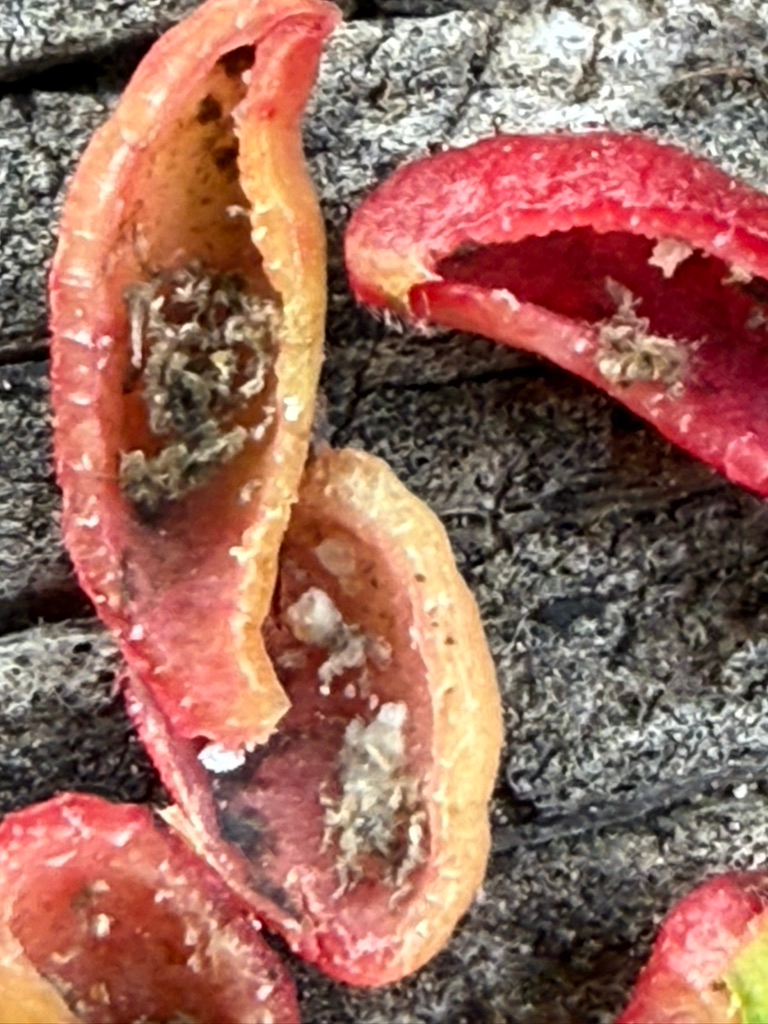
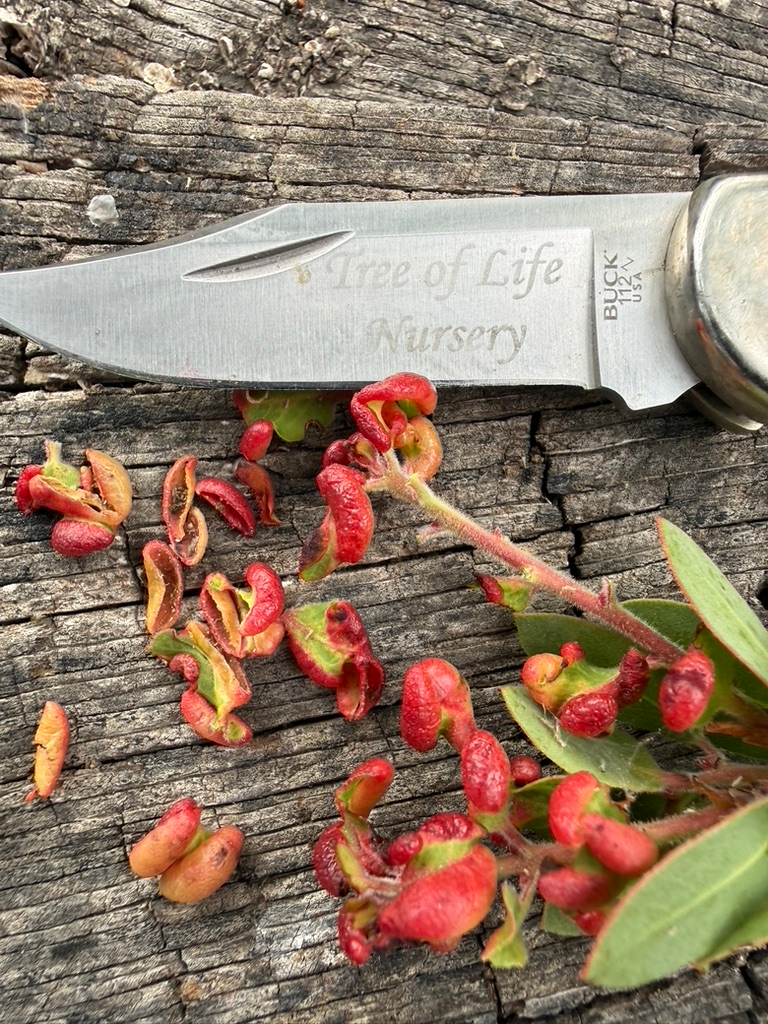
This month you might notice strange colors and shapes on the new growth of your manzanitas. Some varieties get this worse than others, and some years are worse than others. Some plants never get it in one place and can be infested elsewhere. But when you see it, you know, “Something ain’t right.”
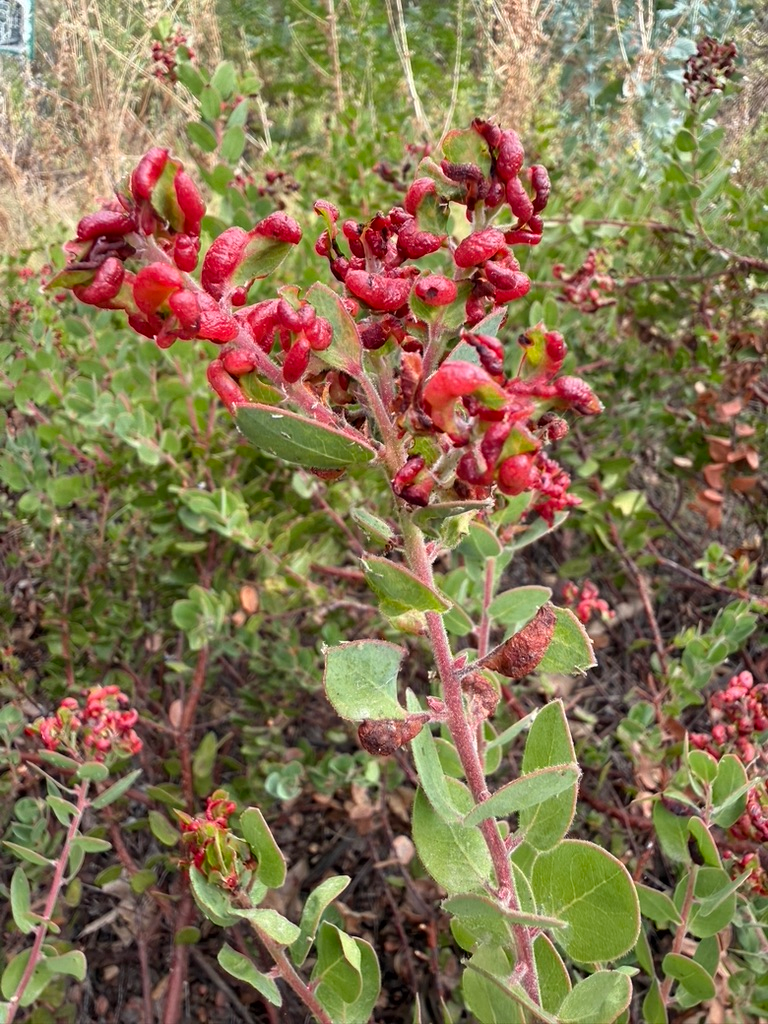
Unlike most other aphid species, this one attacks a specific plant type and in a weird way. Instead of feeding on the plant from the surface, this little guy injects a hormone to cause the leaf to make a distorted gall surrounding the aphids as they feed and grow, protecting them from predators. The only “control” measure we have as natural gardeners is to cut the affected branch tips off and discard them in the trash, as early as possible, at signs of early infestation if possible. More information can be found here: https://ipm.ucanr.edu/home-and-landscape/manzanita-leafgall-aphid/#gsc.tab=0
Adding plants and seed
Summer plantings are safe in shade or near the coast, and even at that, would require extra attention in order to maintain the nursery root ball and the new planting backfill at ideal moisture levels. A lot of effort with the risk of drying out or promoting root rot with too much water. The ideal season for planting starts in October, September 15 if we’re lucky. The summer months offer an ideal time for making plans.
My Patio Re-wild (small space)
Do not neglect potted plants, raised planters, and other patio plantings where root zones are limited, plants are often crowded, space is at a premium. Trim the plants to allow good air circulation, water thoroughly (DS) when it’s time to water (soil dry to the touch 3” deep), and perform RS frequently. Since the roots cannot explore uncharted territory, consider a liquid feed or dry organic fertilizer, half strength in summer months, full strength during the cool season when the plants are growing.
Phytophilia
Our love for plants and their reciprocal response. The conversation.
This month the dialog revolves around “nest.” Of course we immediately think of birds. But do you have a favorite “nesting place” in your garden, that safe spot you go to as a refuge… maybe to sit, or sleep, or read, or just think. The garden calls us in. And if you’re still long enough, the birds will join you.
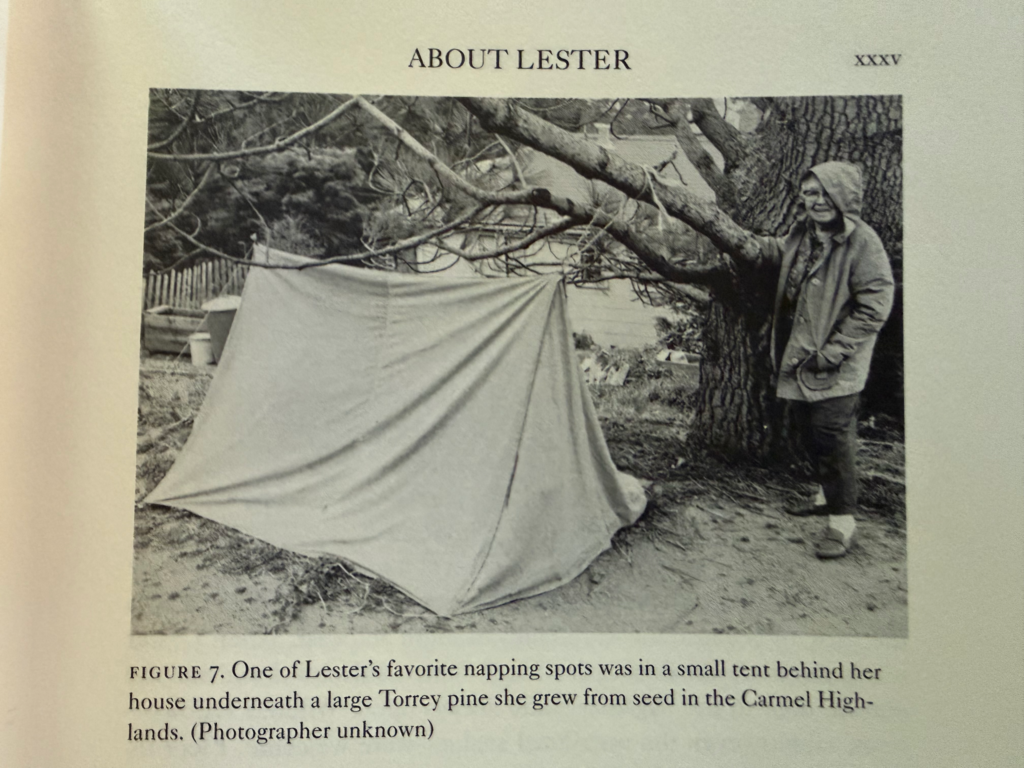
The admirable Lester Rowntree, (1879-1979), pioneer field botanist and horticulturist (Google her if you are unfamiliar with the name, the person, her extensive writing, and her story), traveled and camped all over our State. Collected seeds, stories, experience and made deep connections with people, places, and plants.. As an older woman, she would retire into her garden behind her Carmel Highlands home, to sleep in a tent pitched under the huge Torrey pine she had grown from seed. Lester’s life with plants, including her frequent naps, secure in her garden’s nesting place, allowed her to see 100 years of nature’s beauty.
Re-wild Principles
In order to add a measure of “Re-wild” into our natural gardens, we need to see nature as strong and resilient, and we need to open every door and window wide, so nature can reinhabit the space we call a garden. Just enough.This might mean letting plants (even certain weeds) grow in the pavement cracks, leave some branches grow even though we have to duck to walk under them, leave low spots and puddles alone, bare earth for ground nesting bees, mud for butterflies, leave a few decaying logs and branches in place, leave natural leaf drop accumulate under its source plant. Notice that all of the examples listed above require “let,” and “leave,” implying a hands-off approach.
But here’s something you can “do” to keep Re-wild alive in your garden. Prune. Artfully thin certain shrubs and head them back on a consistent basis so they never appear to have been pruned. You can keep certainceratin shrubs (like lemonade berry (Rhus integrifolia) and sugar bush (Rhus ovata) quitequie small, even miniature (2-3’ high) for many years if you are diligent. This also gives you a tender hands-on connection to these plants.
Important Review
Tree of Life – Gracias Amigos! Adios!
Nature bats last
CNHF has a new home office, headquarters and teaching nursery site. Yay!
Enjoy the summer garden
DS + RS = Success
No major pruning, always artful trimming
Hungry herbivores, watch for manzanita gall aphid
Plant in fall, plan ahead
Fertilize container plants
Nest
Miniature shrubs
Engage
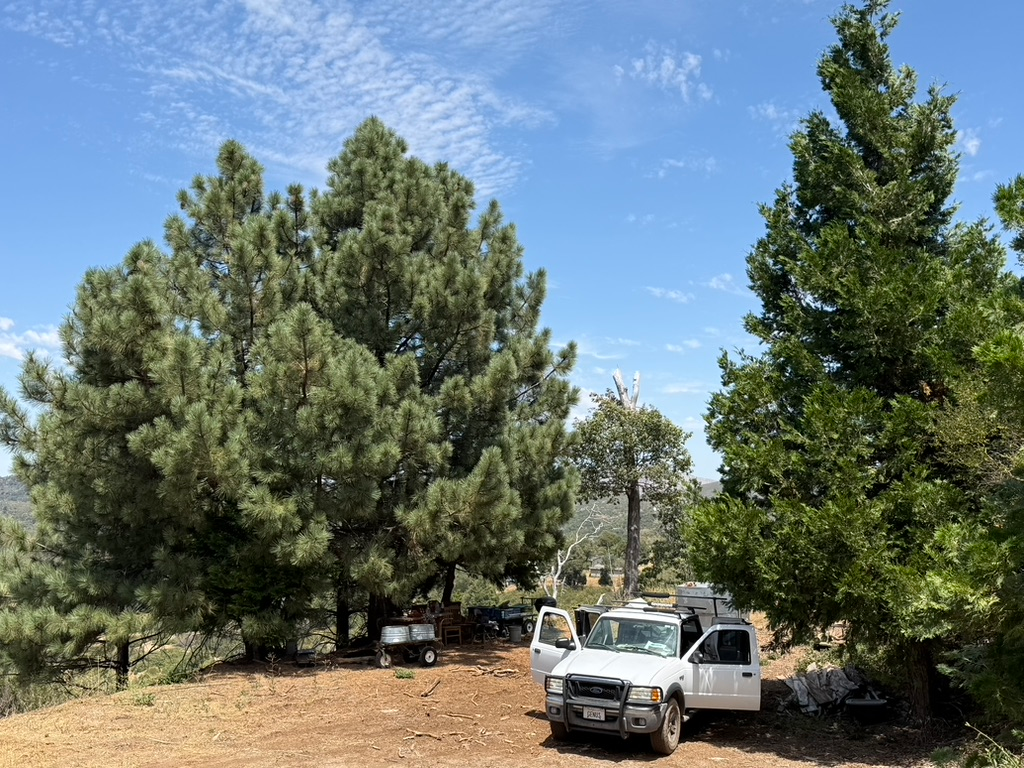
Quiet. Maybe it means silence, and quiet is certainly easier to find in a silent place, but the quiet we seek in nature involves noises. Quiet is calm, and in nature it includes birdsong, the wind through pines, maybe a little water fall, rolling waves, the crunch of leaves underfoot, the crunch of sand underfoot, a woodpecker pecking, bees buzzing at a distance or close by, the scurry of a lizard, a fish jumping, a raven pair click-clacking their scold, rain falling all around (winter), or ceanothus seeds being launched from their drying dehiscing seed pods (summer). Recently I drove 100 miles (60 as the raven flies) to find such a quiet place. I sat in the shade of two Coulter pines, vigorous youths, already releasing their own huge cones after having themselves sprouted only 22 years ago, prompt followers of the Cedar Fire. The quiet I sought was all around, accompanied by the many precious sounds of nature. The shade was fine.
A thought came to me. I had brought a wee windchime, a nicely tuned one, saved from the patio at the Tree of Life office. Should I hang it on this tree, even though, except on rare occasion, no one (no human, that is) will be here? Will the little ding ding dong ding dong dong intrude into the quiet, or add human beauty to the natural silence? The chimes are small, their pitch is high and light. Their sound, pleasant.
An experiment. Hang it and sit back down, the afternoon wind sufficient to set it off slightly. Within a minute, a group of immature lesser goldfinches swooped in, flitting and hiding themselves about the branches, enthusiastically joining the chorus. In pitch no less. I’m convinced… the chimes called them in.
Maybe not, but why not believe it so. For that matter, why not believe that during breezy daylight hours, they come and go as a flock on a whim, to sing in tune with the wind, and then carry their song to every nearby chimeless tree. Why not believe they are there right now? This belief brings quiet to my heart.
Let’s keep makin’ this thing happen.
From July CalNativeHort CONNECT,
Mike Evans
Questions? Help is just one call or one email away. connect@calnativehort.org