
By Lori Whalen, February 2026
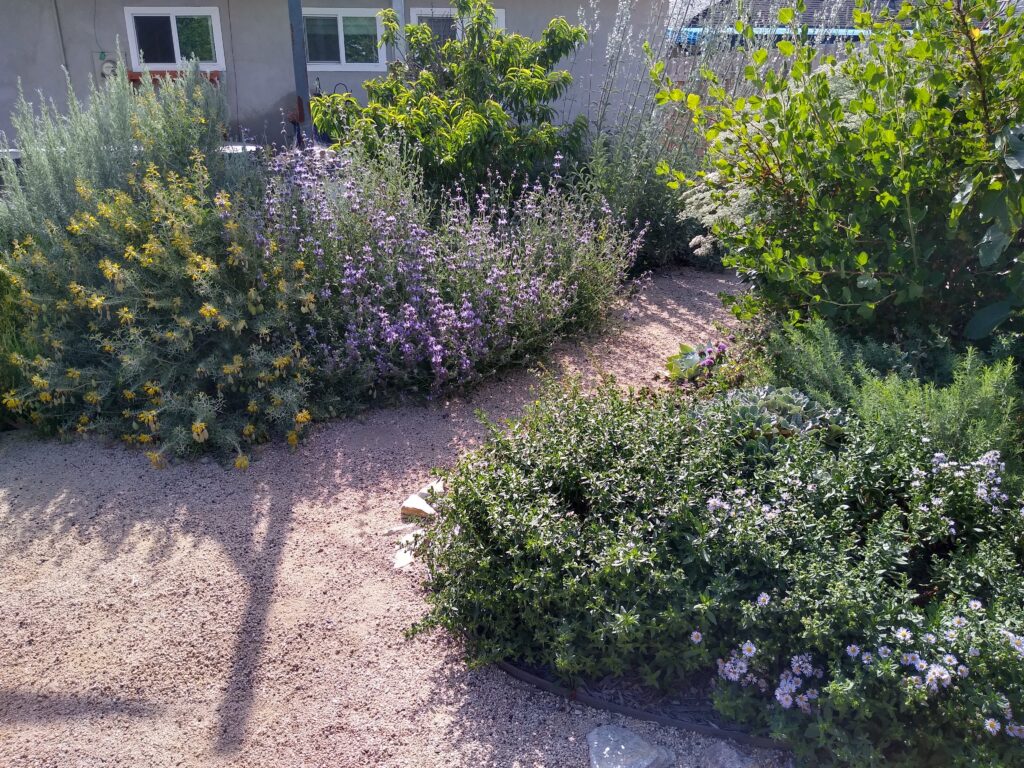
Native Plant Resistance
By Lori Whalen, February 2026
There is a moment—subtle, visceral—when a place feels right. Not manicured or shaped unnaturally in an attempt to impress. Just right in a way that settles the body. The air smells familiar. The ground seems to know you. You are not a visitor so much as a participant.
Most of us recognize this feeling immediately when we step into an intact ecosystem: a chaparral hillside after rain, coastal sage scrub at dawn, a forest where leaf litter muffles sound and time loosens its grip. What’s harder to articulate—but impossible to ignore—is how rare that feeling has become in our everyday landscapes.
Instead, we are surrounded by lawns that demand constant inputs, palms that belong to somewhere else, and ornamental plants selected for novelty rather than relationship. These landscapes erase local character, crush individuality, and quietly disconnect us from the fact that we live in a very specific, very special place.
For me, that place is Southern California— a landscape shaped by drought and fire, fog and wind, patience and restraint. But the truth holds across the state: every region has a voice, and we have spent decades teaching our landscapes not to speak.
Choosing native plants is not simply a gardening preference.
It is a form of resistance.
Resistance to Forgetting
Non-native, contextless landscaping trains us to see land as backdrop rather than living system. It replaces seasonal cues with uniform green. It silences insects and birds and severs ancient relationships between soil, plants, fungi, and animals.
Native plants do the opposite. They insist on memory.
They carry the imprint of local climate—summer drought, winter rain, fire, fog. They remind us that this place has always had rhythms, long before sprinklers and sod. Long before humans. When we plant natives, we align ourselves with those rhythms instead of fighting them.
This is not nostalgia.
It is ecological literacy.
Resistance to Control
Much of modern landscaping is about dominance: controlling growth, erasing change, suppressing decay. Native plant communities resist this impulse. They are dynamic. They go dormant. They drop leaves. They respond to rain and retreat from drought. They do not apologize for looking different in August than they do in March.
Living with native plants requires a shift in mindset—from command to collaboration.
For some, that shift is uncomfortable not because it is difficult, but because it is visible. It can mean going against the norm. Against homeowners’ association rules. Against the expectation that landscapes should signal order, wealth, or compliance. Choosing natives can feel like quietly refusing to conform.
But that discomfort is also where transformation begins.
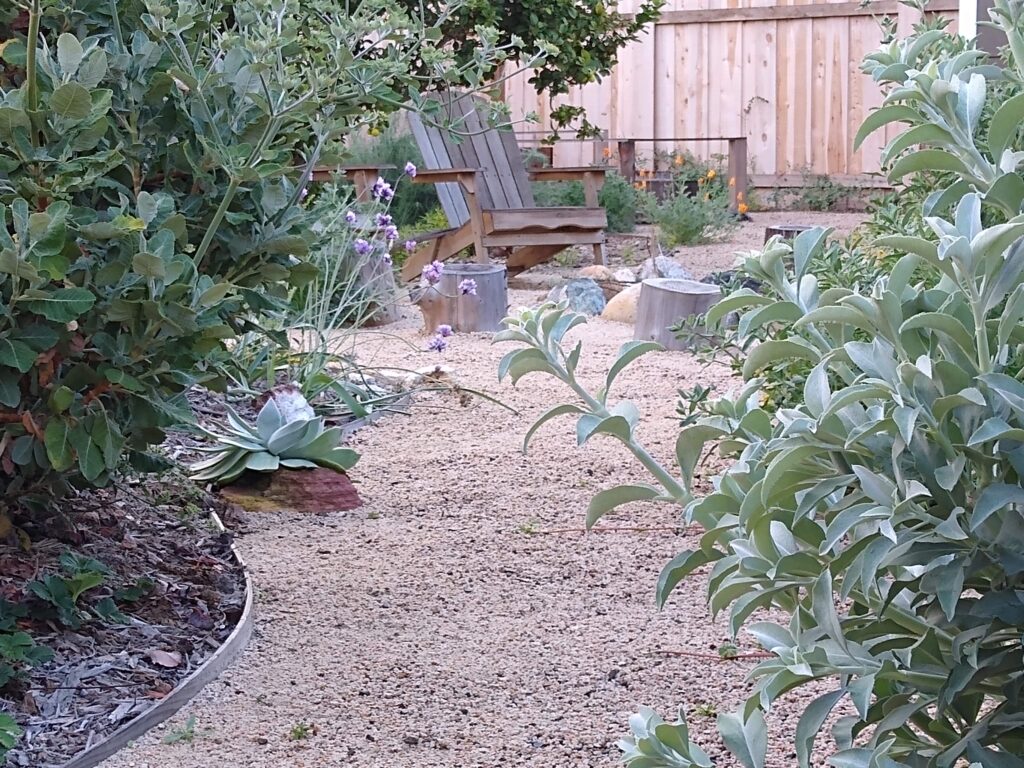
Native plant gardening asks us to observe more closely—to notice what is happening instead of forcing what we want to happen. It asks us to trust seasonal cycles and to relinquish the fantasy that nature exists on demand.
Some of these observations stay with you forever.
More than two decades ago, on an early summer morning hike in Laguna Coast Wilderness Park, I first heard the sound of giant wild rye rattling—almost clicking—as coastal dampness evaporated from its leaves. It wasn’t loud. It wasn’t showy. But it stopped me in my tracks. I still listen for that sound on summer mornings now, and when I hear it, I know exactly where I am.
Resistance to Disconnection
Native plants restore relationships. Not in the abstract, but in measurable, visible ways.
Pollinators return. Birds forage. The soil comes alive—full of insects, fungi, and small, industrious creatures working through leaf litter and topsoil. Water is held instead of shed. Nutrients are cycled instead of imported.
For people, something else returns too: orientation.
There is a particular comfort in recognizing what grows where you live. In knowing, almost instinctively, that it must be January because the currant is blooming, or February because the ceanothus has erupted into flower. In noticing how mulefat releases its quiet, resinous scent at dusk along a streambank, or how subtle changes in light and smell mark the turning of the year.
This knowledge does not just benefit wildlife.
It gives humans a sense of belonging that modern life rarely offers.
I’ve felt this belonging most clearly through sound.
At eighteen, as a camp counselor at a Girl Scout camp in the Angeles National Forest—Camp Singing Pines—I learned that trees do, in fact, sing. Late at night, after the campfire circle and after the campers had gone to bed, I would lie awake listening to the pines sway and sigh under the moon.
Years later, during a brewing storm in the Sierra Nevada near Muir Lake, I stood alone on a boulder while my companions retreated to the tent. The wind moved through a forest of lodgepole and Jeffrey pines like a slow wave—rustling the needles of one tree to my right, passing over me, then waking the tree to my left. With my eyes closed, I could hear the wind travel. You could hear the trees dancing together.
These are not romantic abstractions.
They are relationships formed through attention.
Resistance as an Act of Care
Resistance is often framed as loud or confrontational. But native plant resistance is quieter. It looks like patience. It looks like choosing long-term health over instant gratification. It looks like letting a landscape be honest about where it is.
In a world that rewards speed, uniformity, and endless consumption, native plants model something quietly subversive: adaptation, resilience, and restraint. They refuse to be simplified for convenience or forced to perform outside their ecological limits. They do not exist to be endlessly replicated or installed the same way everywhere. They belong where they belong.
Planting native plants is not about perfection.
It is about honoring nature’s precision.
When plants live—or fail—based on where they are placed, when volunteers appear where conditions are right rather than where we planned them, we are witnessing an older, more exacting standard of success.
It is about alignment.
Alignment with place.
Alignment with the passing of time.
Alignment with the living systems that make all of this possible.
Coming Home to Place
Imagine neighborhoods planted as ecosystems instead of displays. Imagine coming home to the scent of sages warming in the afternoon sun, to grasses that move with the breeze instead of resisting it, to gardens that belong unmistakably to here.
This is not an aesthetic trend.
It is a re-rooting.
It is also a necessary response to habitat loss, climate change, and the growing distance between people and the land that sustains them.
Native plant gardening asks a simple—but quietly radical—question:
What if, instead of landscapes that signal control, compliance, and consumption, we chose landscapes that signal care, memory, and belonging?
In a culture that tells us bigger, greener, faster is better, choosing native plants is a refusal to forget where we are.
And sometimes, resistance looks exactly like that.
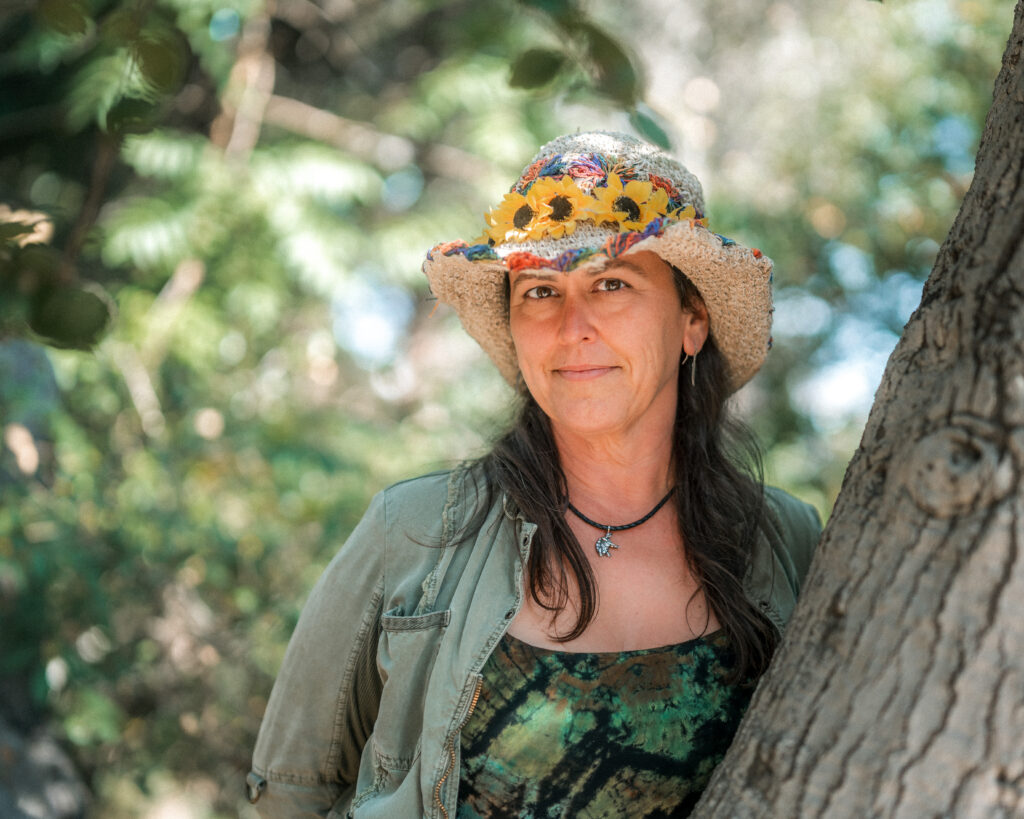
Lori Whalen is the Vice President of Environmental Nature Center in Newport Beach, California. Lori is a horticulturist, and a thoughtful writer, who enjoys camping and hiking when she is not busy tending her plants. www.encenter.org