
MAY 2026-05 Volume 1, Number 5
Words and photos by Mike Evans
M is for May and for Mother’s Day and for Matilija poppy
and for
My Sincere Apologies that this May newsletter is being posted in June.
The final days taking down Tree of Life Nursery have required all our attention. After June, we will focus 100% on CalNativeHort.
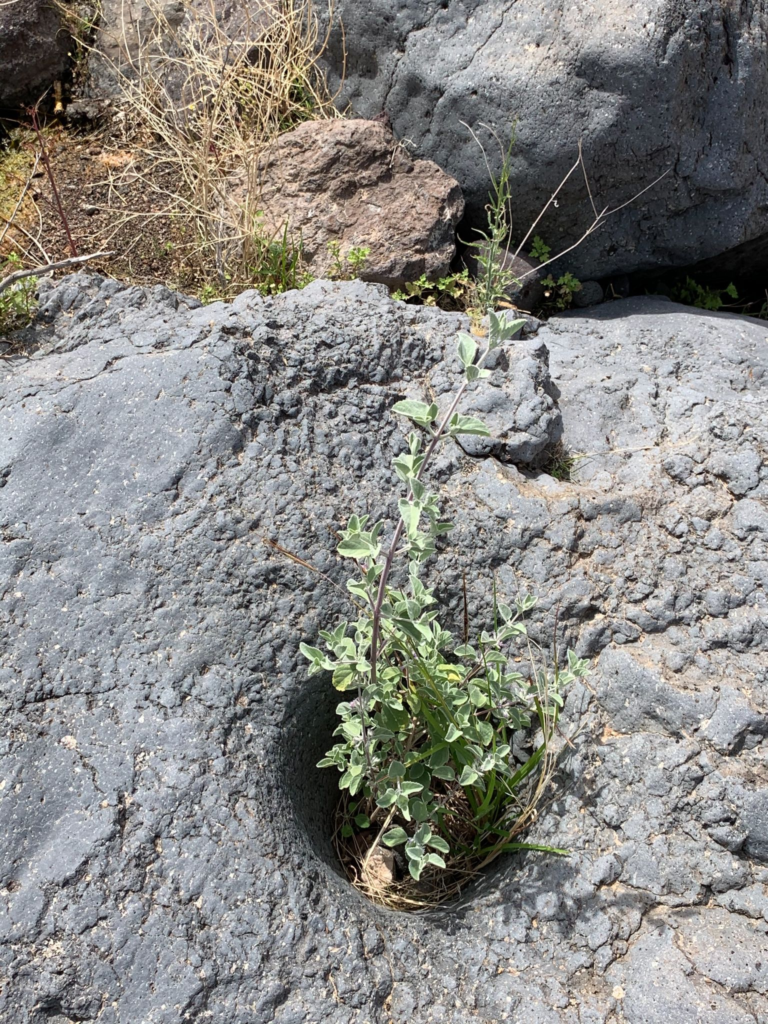
Evidence of a past life sprouting new life.
A desert lavender seeding has taken root in the organic material accumulated deep inside a bedrock mortero. Tinaja de los Papagos, Pinacate, Sonora, Mexico.
Native horticulture this month
Watering
This tried and true watering method was first created and described in the Tree of Life Nursery newsletters several years ago, and its definition has been repeated in various installments over the years.
Here it is for the first time in CalNativeHort Connect:
Deep Soak (DS) and Refreshing Sprinkles (RS) equals Success
DS + RS = Success
Summer watering method for native plant gardens consisting of established plants. All newly planted plants (approximately less than 6-9 months in the ground) require individualized attention with hand watering. The DS + RS Method will keep established gardens lush and beautiful all year.
The goal:
Supplement annual rainfall with irrigation equivalent to 6-10” precipitation, evenly applied during the dry season, approx May thru October. You can achieve this DS goal with a conventional sprinkler system, a hand-set hose end sprinkler that you move around to cover all the ground, or mini sprinklers plumbed in series on a portable “drag line” hose connected to the garden hose. Also, you will need a hose and a spray nozzle for doing the RS by hand.
Irrigation Event = A watering that simulates a winter rain event that soaks into the ground
Sprinkle Event = A watering that simulated a very light rain that does not soak into the ground
Precipitation Rate = Inches per hour applied by your sprinkler system
Intraval = Time between irrigation events
Duration = Time sprinklers are running
Time = Time of day for applying water
Season = Time of year for supplemental water, usually May through October
Deep Soak (DS) is a single “Irrigation Event” applying the equivalent approx 1 – 1.5” precipitation, simulating a nice winter rain event. You want 100% to soak in and no run-off or waste. Go online and check the “Precipitation Rate” for your sprinkler head. If you have a sprinkler system with a precipitation rate of .75” per hour, you will need to run your sprinklers for two hours “Duration” to apply 1.5” of water. This is impractical. Wind, overspray, puddling, run-off and evaporation would negatively affect your irrigation event if you left the sprinklers on for two hours. So how do you get that much water into the ground so that it all soaks in? Note: 1 -1.5” gentle rain will penetrate most soils 6 – 10”. Assuming winter rains have provided moisture to the root zone 14” deep, your DS applied approximately once a month during the dry season will maintain ideal moisture at that depth.
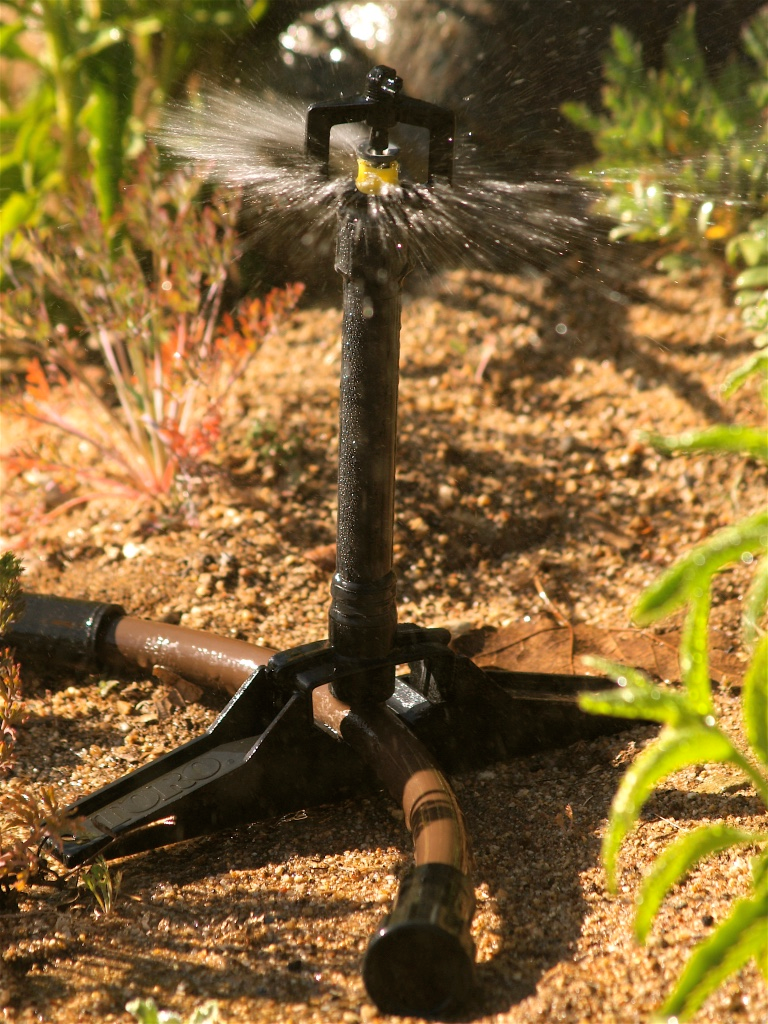
Yes! Yes! Yes! Mini-sprinkler. Diameter of spread = 16 feet. Precipitation rate = 1/8’ per hour. This is a very effective way to water native plants in heavy clay soils because the water is applied very slowly and it all soaks into the ground. To achieve a Deep Soak simulating a 1.5” rain event, you would run this sprinkler on three consecutive days for durations that would add up to around 12 hours. Since the trajectory is low, most established native plants would be fine with this sprinkler running all night, and if your soil will absorb the water, you could leave this mini sprinkler to keep the soil moist down deep by running it approximately 3-5 times a year. These can be assembled in series, connected to your garen hose and used to effectively perform your Deep Soaks.
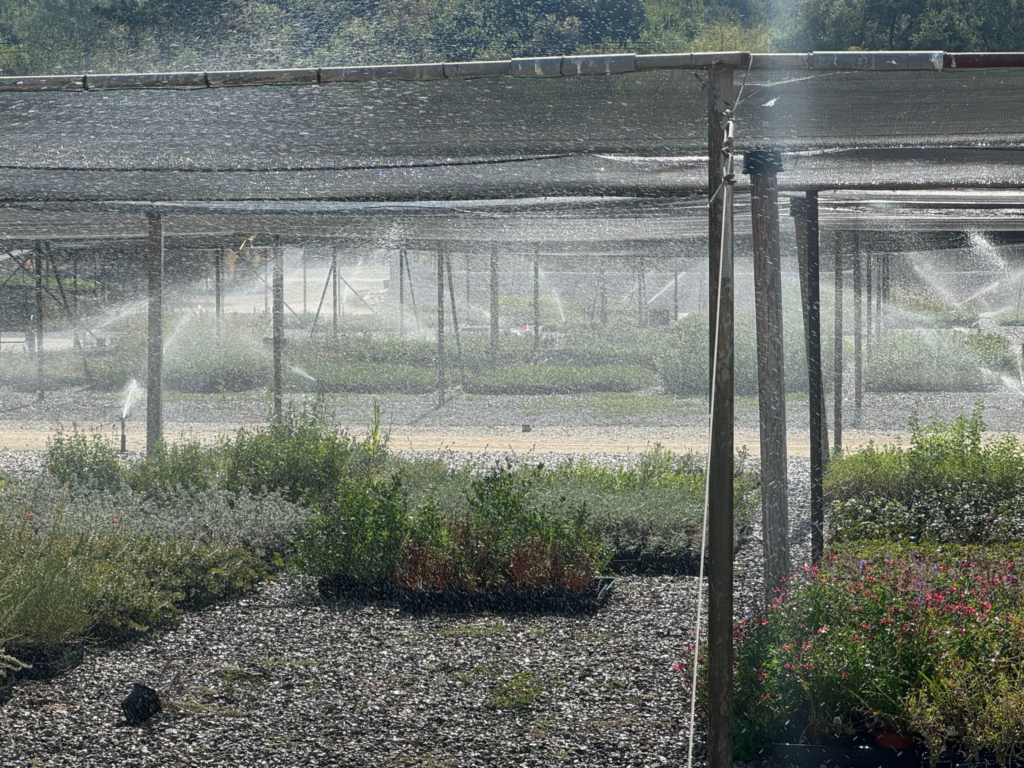
Deep Soak principle applied to nursery watering. Summer season overhead irrigation at Tree of Life Nursery was tricky. We did it early in the morning to avoid watering during the heat of the day. We needed to apply 30-45 minutes through the sprinklers in order for the water to thoroughly soak the root ball. Subjecting the leaves to so much humidity for such a long duration, (most natives are not adapted to summer rain), might have predisposed them to fungal diseases. We applied the total 30-45 minute irrigation in three, 10-15 minute intervals, with approximately 30 minutes between each run cycle, especially during heat waves. This allowed the leaves to dry and the water to soak in, and allowed Oxygen to remain present in the root zone as well. Formula: 10 minutes water on, 30 minutes water off, repeat 3X = approximately 2 hours needed, 6am to 8 am to get all the watering accomplished, soaking the root ball and not encouraging stem or root diseases. During the long hot days of summer, this pattern was required about 3 times per week. Proper management of summer water is the single most important factor in successful production of native plants compared to general ornamentals in container plant nurseries.
DS = , “Deep Soak” watering “Irrigation Event” with water applied over two or three consecutive days, early in the morning; i.e.; 20 – 30 minutes “Duration” per day, three days in a row, starting at 6:00 AM each day. Depending on your location and your soil type, you will do this at an “Intraval” of approximately once a month, May thru October for a total of 4 – 6 Deep Soaks per year, totaling 6 – 10” annual supplemental precipitation. By comparison, turf requires 60” and most common non-native landscapes require 24 – 30”, sometimes considered “California Friendly” in certain contexts. Natives use a fraction of the water required for exotic gardens, even the so-called drought tolerant ones.
Summary Deep Soak (DS)
“Irrigation Event” = Applied by overhead sprinkler system
“Interval” = every 3 – 6 weeks (approximately once a month) depending on weather, location, soil type, local conditions
“Duration” = approximately 1.5 – 2 hours or equivalent to apply 1 – 1.5” precipitation. Divide the total duration into two or three consecutive days to allow all the water to soak in.
“Time” = early morning
“Season” = May through October depending on soil moisture remaining after the winter rainy season
Upon completion, leaves should be dry before the day starts getting hot.
Refreshing Sprinkle (RS) is a “Sprinkle Event” or a simple wetting of the leaves and ground surface. RS differs from DS in that the intent is to simply refresh the garden with virtually no water reaching the root zone. Refreshing Sprinkle is done by hand with a spray nozzle on the hose, allowing you time to “connect” with your garden on a regular basis. You are not watering the root zone, but by relieving stress to the plants, you are allowing the moisture in the root zone to be used more effectively and to last longer between DS events.
RS = “Refreshing Sprinkle” watering applied approximately 3 times a week, (more is OK especially during periods of extreme heat, wind or other desiccating conditions. Extremely important note regarding “Time”: RS is done in the late afternoon/early evening, and never during the heat of day. “Duration” is around 5 – 10 minutes. You simply spray down the entire garden for 5 – 10 minutes, wetting all the leaves and moistening the ground surface. This practice will instantly cool the plants and allow some water absorption through the leaves. Do your RS when the sun is very low, but before dark, ideally so the leaves will be dry before nightfall. RS relieves plant stress, uses very little water and makes the monthly DS more effective. Also it is fun. When the hummingbird comes into the spray to take a shower, remember to turn the sprinkler directly overhead to give yourself a quick RS so you can feel what the plants are feeling. Don’t worry, your clothes will be almost dry before nightfall. Just like the leaves.
Summary Refreshing Sprinkle (RS)
“Sprinkle Event” = Applied by hand, spray nozzle on a hose
“Interval” = three times a week (or more), depending on weather, location, local conditions
“Duration” = approximately 5 minutes
“Time” – late afternoon/early evening
“Season” = May through October and can be continued in fall and winter during hot, dry spells
Upon completion, leaves should be dry before nightfall
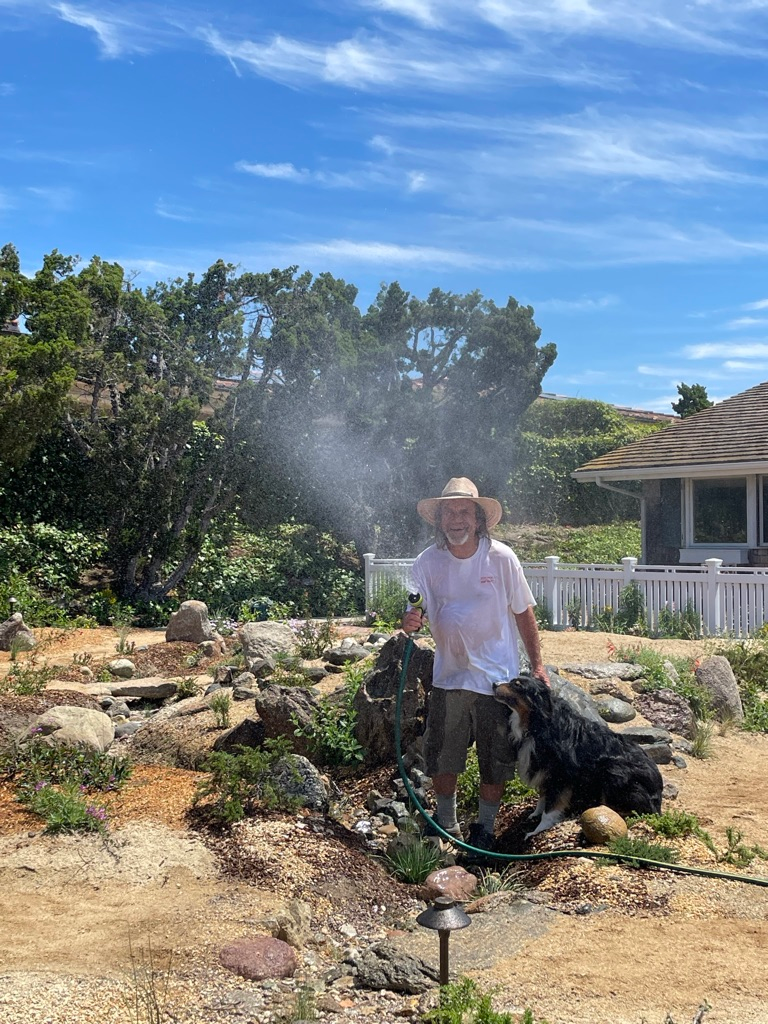 Yes! Yes! Yes! When performing RS, be sure and turn the sprinkler straight overhead so you (and your dog) can take a quick outdoor shower. You will feel exactly what your plants are feeling, refreshed, cooled and invigorated. Your clothing, like the plant’s leaves, will be dry again in just a few minutes.
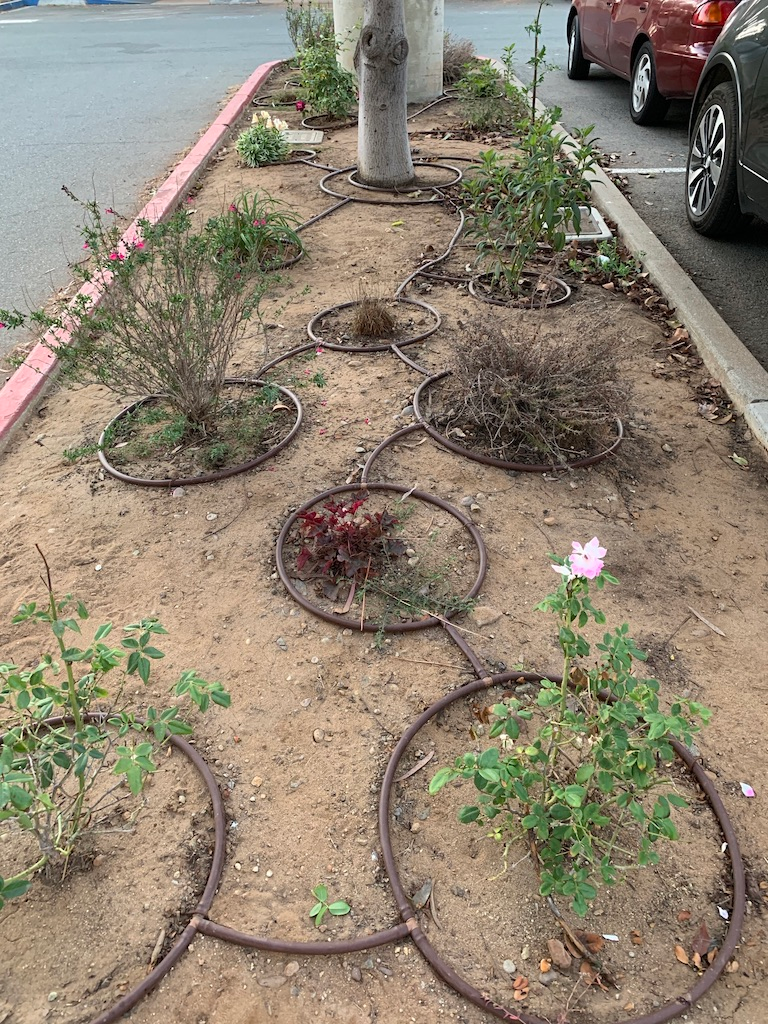 No! No! No! What’s wrong with this picture? Everything. This is not what a garden should look like. The double ring around the tree trunk is especially bad since the tree has no feeder roots there. This is an industry gimmick, not a true watering method.
Engage
Over the years, everyone who has adopted the DS + RS = Success watering method has experienced a brand new, personalized experience in connecting to nature through their garden. Essentially, this irrigation technique for summer watering causes you to rely on watching the calendar, observing the weather, and then starting and stopping the water by hand. This puts you in touch with your garden. As a general rule, automated watering programs both detach you from your garden and they do a poor job of keeping plants healthy.
If you are not already practicing this easy method for watering in summer, start now! You only need to do Deep Soaks 3-5 times a year. And the frequent Refreshing Sprinkles are a joy to perform, allowing you to slow down on occasional summer evenings, hose in hand, and hummingbirds in view.
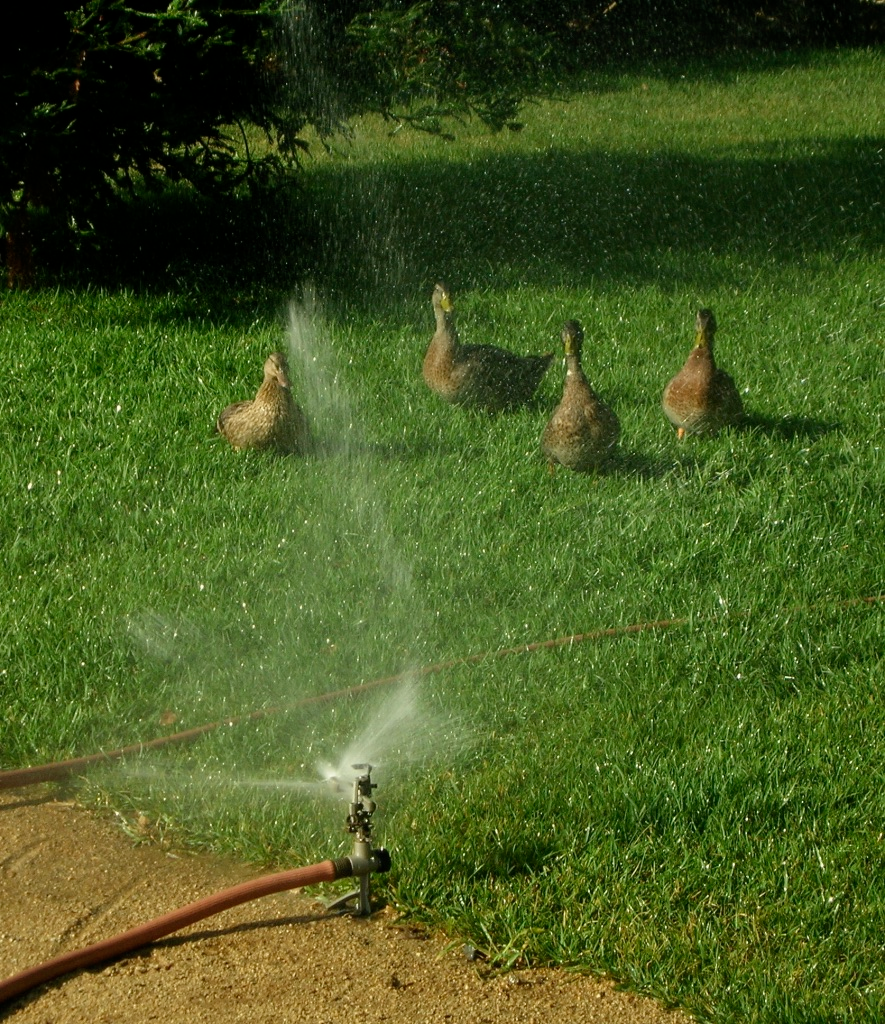
No! No! No! Unless you’re a duck. This is probably a good sign you are overwatering.
But the idea is right, a hose-end sprinkler getting all the ground wet. Use your imagination to substitute native plants for the turf and a few quail for the ducks. For a natural garden, the sprinkler would be sued for a DS approx 4 times a year.
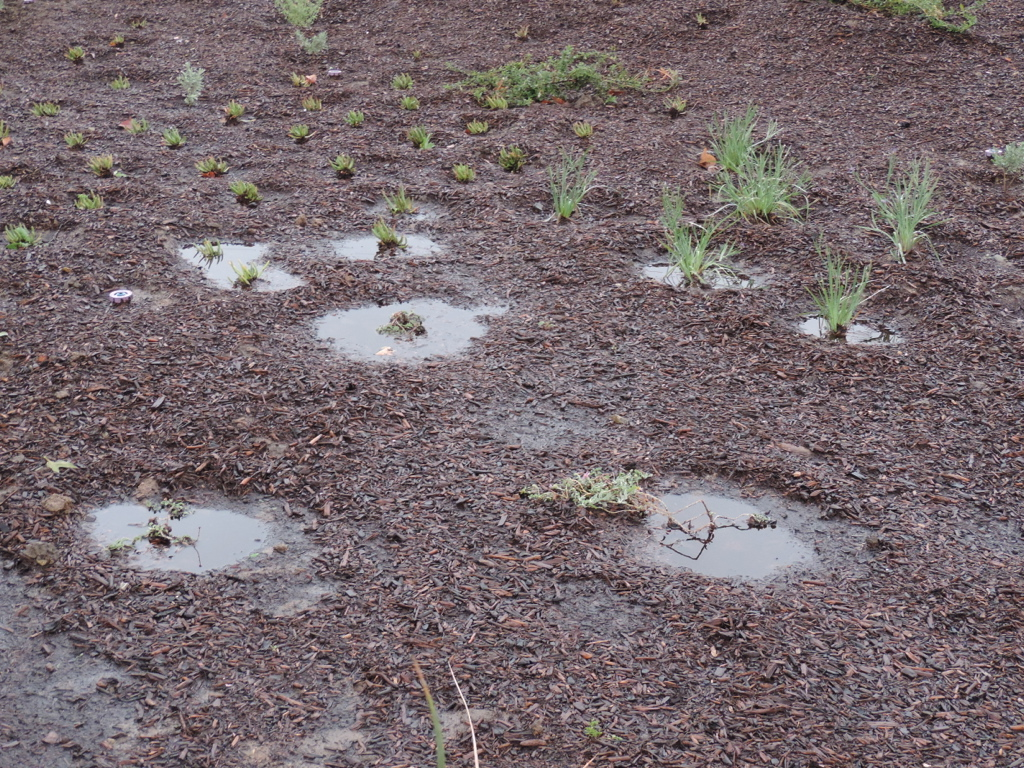
No! No! No! These plants were planted too deep and the mulch was applied too thick. After a couple Deep Soaks, they are already destined to die from root rot.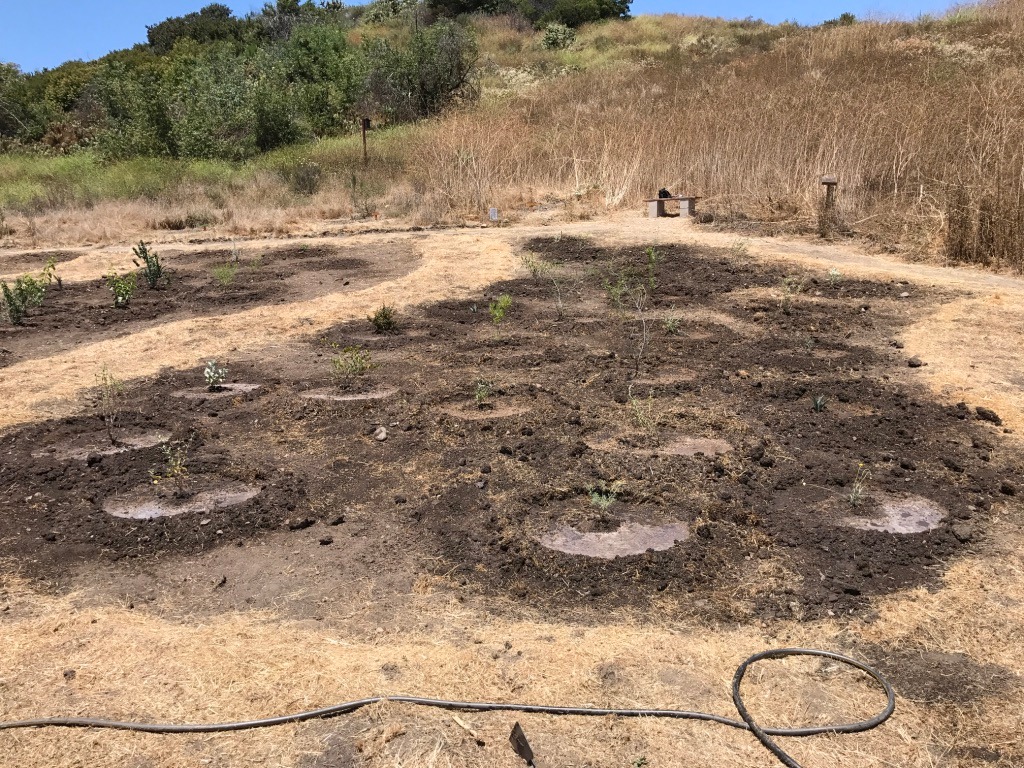
Yes! Yes! Yes! Tony Tubbs @tony_tubbs Nature Garden Tesoro High School. Initial Deep Soak after expert planting in prewatered holes with generous watering basins. These plants will receive approx 2-3 Deep Soaks a year for a couple years, then no more supplemental irrigation.
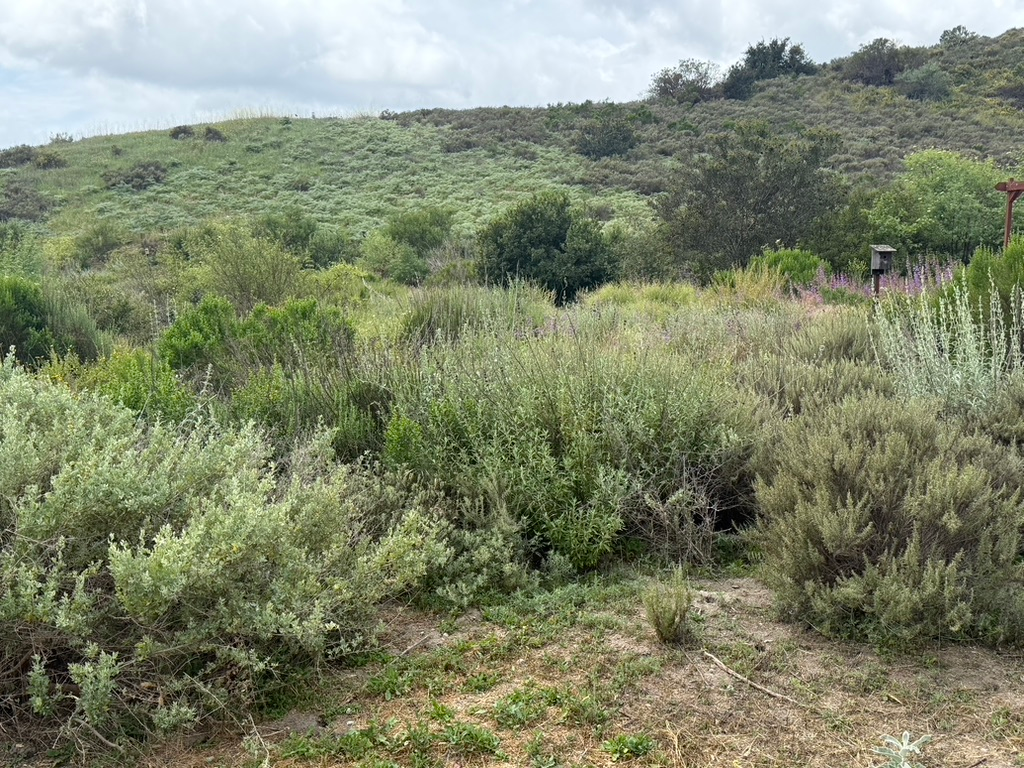
Yes! Yes! Yes! The same Tesoro High School garden displays remarkable success, 6 years after planting. No more irrigation needed. Note: Despite the claims of all the landscape irrigation gadgets out there; fancy controllers, sprinkler heads, drip emitters, watering tubes, whatever… the only real way to SAVE water is to NOT water.
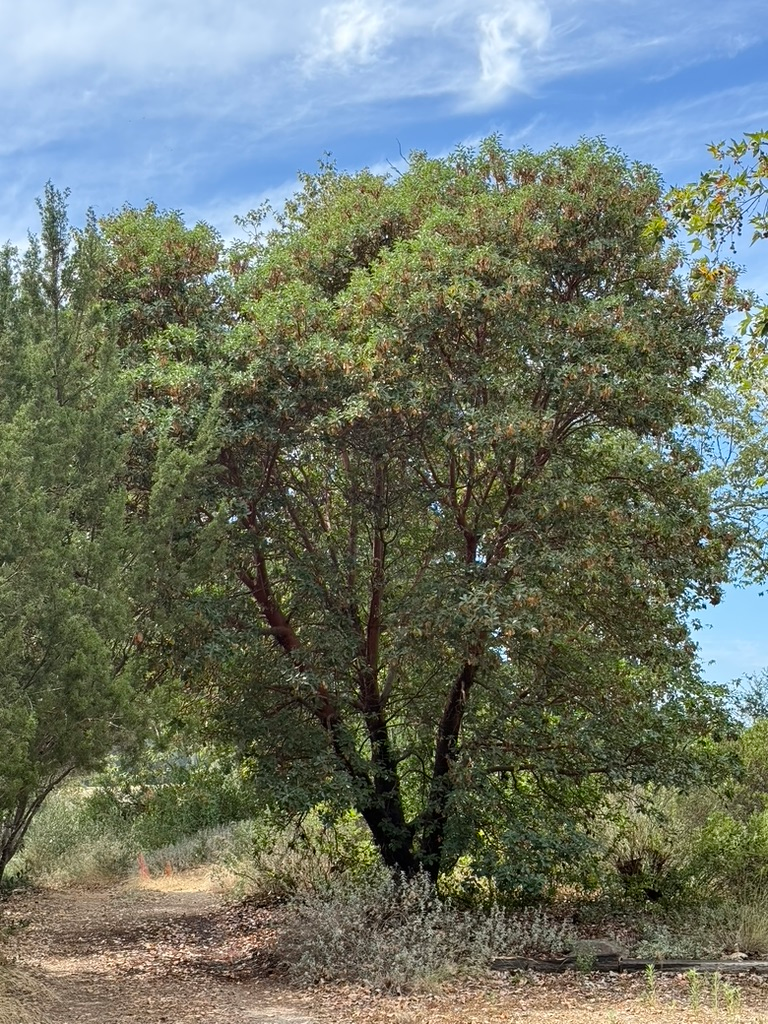
Madroño, Arbutus menziesii. This majestic tree species ranges from British Columbia to southern California. Its occurrence south of San Luis Obispo County however, is spotty at best, represented by isolated stands consisting of single or handfuls of specimens as far south as San Diego County (Palomar). It is not documented in Baja California. Rainfall in the heart of its range (the mixed coniferous forests of the Pacific Northwest) is easily 4-5 times that of southern California’s, yet this 35 year-old garden specimen at Tree of Life Nursery is perfectly healthy. How can that be? Deep Soak irrigation. This tree receives approximately 2-3 Deep Soaks per year. Obviously, no Refreshing Sprinkles are applied to this tree, it is too tall, it does not need it. Deep Soaks are necessary for good summer watering and Refreshing Sprinkles are the bonus that tend to make Deep Soaks more effective. Note: The seed source for this specimen was in the Santa Ynez Mountains of Santa Barbara County, so it is genetically adapted to more heat and drought than its kin in Vancouver.
From May CalNativeHort CONNECT,
Mike Evans
Questions? Help is just one call or one email away. connect@calnativehort.org