

APRIL 2026-04 Volume 1, Number 4
Words and photos by Mike Evans
Spring has officially arrived, and it came on a day that seemed more like the middle of summer. The extremely hot weather in March and a total lack of measurable rain for the entire month left many of us, including annual plants, invertebrate pollinators, and migratory birds, scratching our heads. FYI, the swallows came back to Capistrano, pretty much right on schedule. Rainfall in San Juan Capistrano to date: 15.78”, so far so good.
Current events, history, review, and notes
Firstly, a quick note of thanks to our members and subscribers. Our fledgling nonprofit is about one year old this month and we have only been offering membership opportunities for the last six months. We’re off to a great start with over 300 members and 1,200 subscribers! CNHF can only continue to connect people to each other and to nature, through community involvement and membership support. Together will form a trustworthy source of information, because we all have a lot to share.
We are in this together, so if you have not yet done so, click the membership button and join the team. Your participation will add great value to our community.
And secondly, thanks to everyone, members or not, who subscribe and read our newsletter. Tell your friends.
And thirdly, thanks again.
In the News
CalNativeHort has been very active this spring, cultivating relationships, and representing sound native horticulture at various events and speaking engagements. Regarding the land we are trying to secure for a headquarters including a nursery/garden component, the wheels of bureaucracy are turning true-to-form slowly. Please stay tuned as we are following every lead. We believe we have a lot to offer to whoever decides to partner with us on a permanent home.
Native horticulture this month
Watering
Because March was hot and dry, you may need to start the Deep Soak plus Refreshing Sprinkle Watering Method early this year. For now, just do a few Refreshing Sprinkles to help retain moisture still present in the soil from recent rains. If we don’t get rain in April, you might consider a Deep Soak towards the end of the month.
Pruning, Weeding, Feeding, Mulching / Top Dress
All manner of garden activity can take place this month with much benefit. Judiciously prune, thin and head back wild growth. Always weed. If you like, apply organic fertilizer and water it in. If areas need a little top dress, organic or mineral, bring it in. Remember, 2” thick for organic, clean wood chips. 1” deep for mineral, DG or fine rock aggregate.
Troubleshooting – Varmints, Pests and Diseases
Lots of new growth after the rains and the warm days last month. Watch for injurious insect plant pests. Plant for diversity and leave lots of flowers, old blooms, and seed heads for the good guys. You will create a natural balance, a vibrant refugia for local beneficials and garden allies.
Adding plants and seed
The window has closed for sowing wildflower seed in your natural garden this year. In fact, for those who sowed seed last fall/winter, congratulations on the personal “superbloom” you are enjoying this month.
Seed Propagation
Now for a taste of the specific, unique, and useful information CalNativeHort will be famous for consistently sharing for years to come:
Here’s a proven propagation planting mix for sowing seeds in nursery flats or containers.
And here’s the basic premise:
80% inert mineral content (of varied constitution), which provides some moisture retention and plenty of pore space for air to penetrate, because roots need oxygen
20% fine organic content, which provides adequate moisture retention as roots need water, too.
By Volume –
3 parts – #2 Perlite, (sponge rock)
3 parts – #2 Vermiculite
2 parts – washed plaster sand, coarse
2 parts – peat moss (pre-moistened)
Blend thoroughly, sprinkling lightly to moisten.
Note: Seedlings that germinate and start to grow will eventually need fertilizer, as this mix is basically inert. You can add a tiny amount of all-purpose organic fertilizer when blending the mix, but you can also wait until you have germination to apply a very light dose of liquid fertilizer.
Ps. That’s the old Tree of Life seed mix, so I know it works.
Pps. If you have suggestions, alterations, or a seed mix you would like to share, write to me.
Ppps. Hey propagators, growers, educators, everyone… This type of information, in and of itself, is worth the price of a membership, right? This is what CNHF is all about… Learning, sharing, growing, thriving, succeeding, celebrating, reproducing. Connecting people to people and places through native plants.
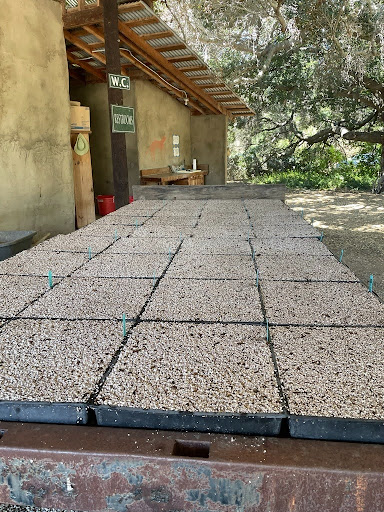
A tried and tested seed mix for germinating native plants.
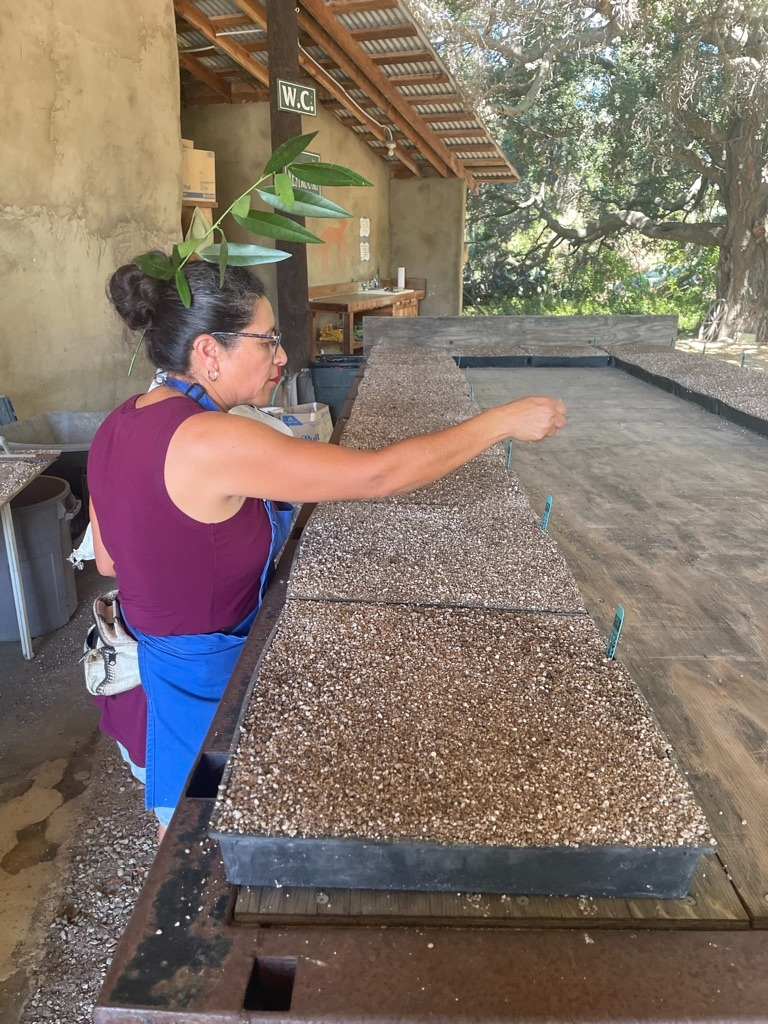
Master seed propagator Haydee Rodriguez sowing seeds in flats at Tree of Life Nursery, August 2023. Note: The branch of California bay (Umbellularia californica) in her hair looks quite nice, but had more to do with discouraging canyon flies, pesky little visitors we learned to live with on warm days.
My Patio Re-wild (small space)
Some of our most iconic shrub species simply get too big to be considered for small gardens or pots, unless we remember the beautiful named varieties. Several cultivars of manzanita, ceanothus, chamise, and coffeeberry have been selected and grown for their small size, compact growth, and tidy garden habits. A few examples include Arctostaphylos ‘Greensphere’, Ceanothus maritimus ‘Popcorn’ (white), or ‘Valley Violet’ (purple), Adenostoma californica ‘Nicolas’, and Frangula californica ‘Ed Holms’ or ‘Leatherleaf’. All these and many more come to mind as miniature versions of some of our most classic California plants, making them ideal candidates for small spaces, patios, and pots.
Phytophilia
Our love for plants and their reciprocal response. The conversation.
We say “Hey you’re looking about as green as you can get.” They say “Green is good, rain and sun are doing it. We like day and night lengths in perfect balance”
Re-wild Principles
Clean the old paths and make new ones. The re-wild garden, no matter how big or small, requires access points and ways to travel in and through. Human paths. If you have a section of the garden that is dense, overgrown, a little too thick to walk through, get your shears and make a new path. You will be surprised how this will give your garden the appearance of being larger, and give you personal connection to an area you may have forgotten. And once you can easily enter and walk through, you will see new stuff, and you will start taking care of the new edges; grooming, planting, and adding new details like rocks and sticks and stones. “Landscapes” are for looking at, gardens need people inside them.
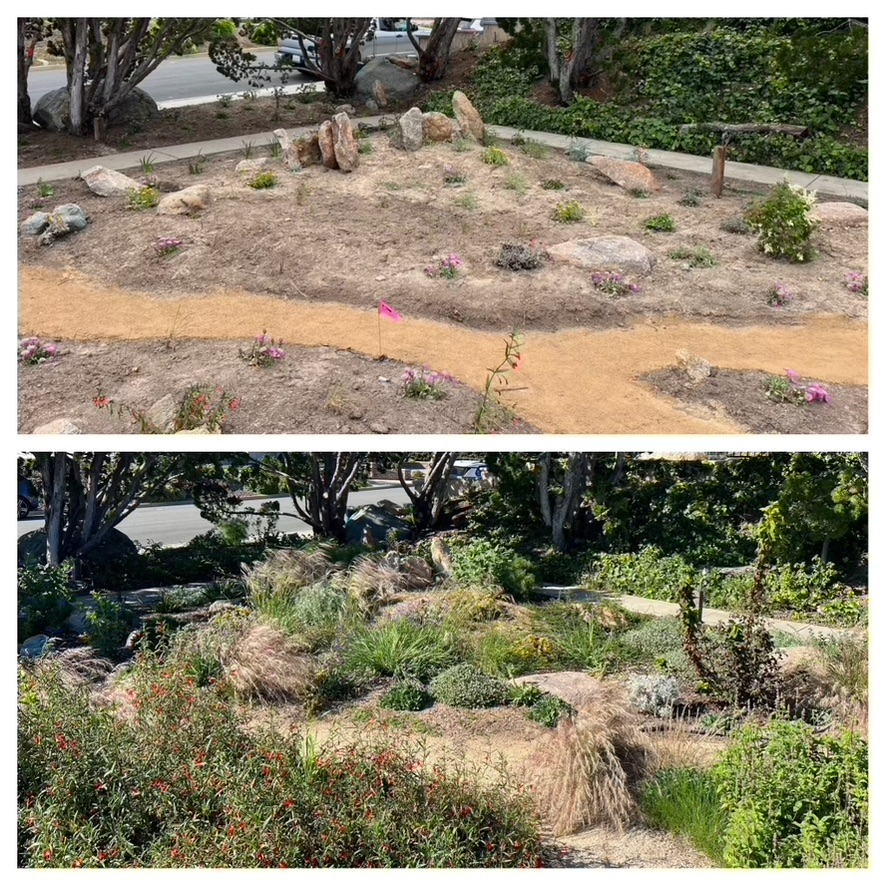
Garden paths, under construction and then nestled into the garden one year later.
Important Review
Hot March. 15.78” to date
Thank you members and subscribers
Spring growth
Refreshing sprinkles OK now
All garden activities are possible
Create a balance
Best seed propagation mix ever
Consider compact cultivars
Green is good
Make a way (a path)
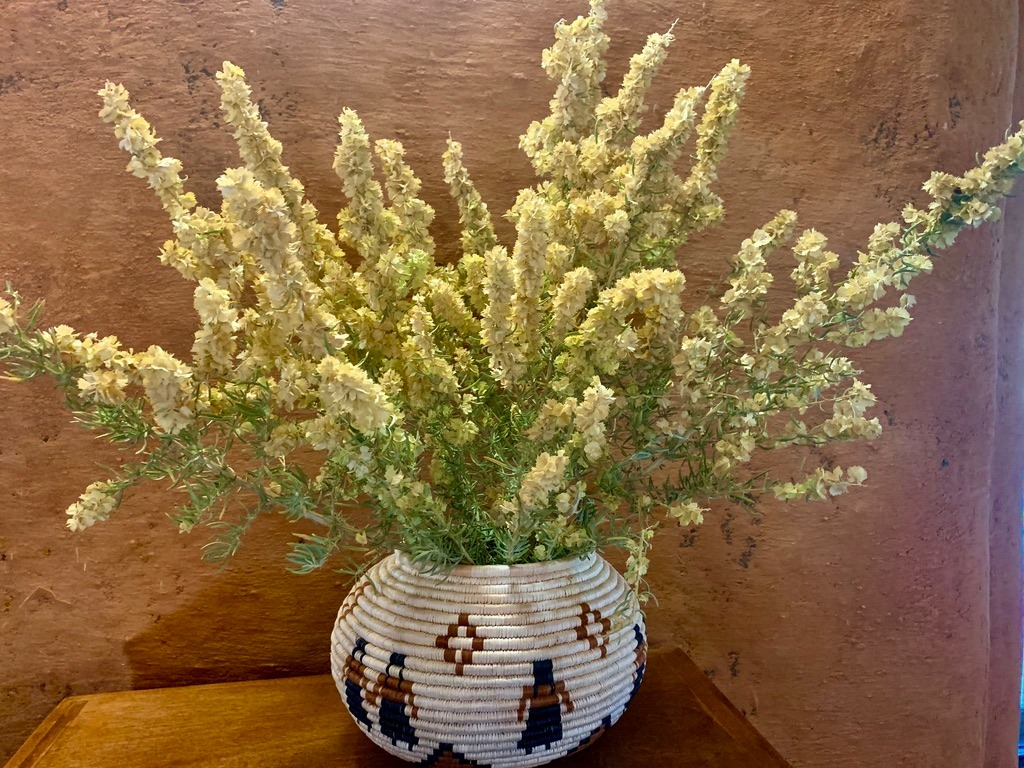
Keep it simple. A few seed-laden branches of four wing saltbush (Atriplex canescens) in a classic Seri basket evoke the sights, sounds, smells, thoughts, and memories of a winter’s day in the desert.
Engage
Keep it simple. Find opportunity to appreciate the most basic elements of time spent in nature. The breeze on your face, the crunch crunch crunch of your boots on a trail, the scratch scratch scratch of the branches on your legs, the birdsong birdchatter all around, the unbelievable scents that make California’s plants so memorable, and the incomparable perfection of a slug of water from your canteen, the moment you stop to take it all in.
And when you’re feeling really clever, you even outsmart yourself. You bring those feelings home with you and relive your best trail times working in your own garden or tending house. I can be on my hands and knees pulling weeds, water bottle at the ready… and in my mind, I am on a distant wilderness path. Or working at my desk, I might glance up at a rock or some dried flowers, and I can momentarily reconnect.
From April CalNativeHort CONNECT,
Mike Evans
Questions? Help is just one call or one email away. connect@calnativehort.org
Up Next
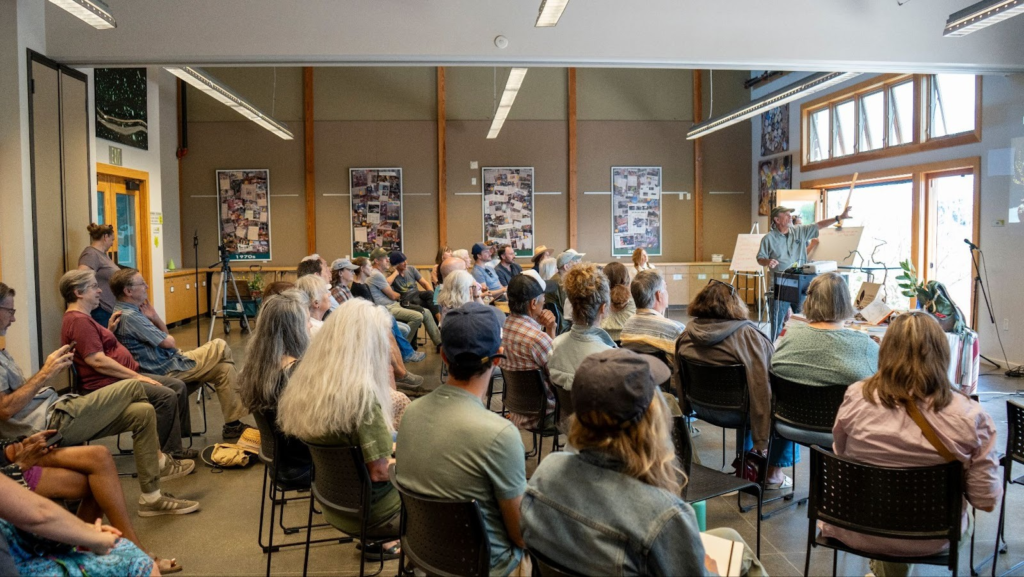
Thank you to those of you who came out to see Mike speak at the Environmental Nature Center on March 29 as a part of the series, “Belonging to Place.” The next one will be “Working with Place,” Saturday, April 25, at 10-11:30am. Register here.
If you missed ‘Belonging to Place’ in person at the ENC, watch it HERE, on our new YouTube Channel and don’t forget to like, comment, and share